When you think of a heart-healthy diet, the usual tips probably come to mind: use less salt, cut down on ghee and fried food, and eat more green vegetables and fish.
Vitamin B12 hardly ever makes that list. But quietly, this small nutrient, also called cobalamin, plays an important role in keeping your heart and blood vessels healthy.
Your body can’t make vitamin B12 on its own, so you need to get it from food or supplements. Falling short of it may affect your heart health more than you’d expect.
The Quiet Link Between Vitamin B12 and Your Heart
Homocysteine is an amino acid your body makes while breaking down protein. Too much of it can irritate your blood vessels and has been linked to stiff arteries, inflammation, and blood clots.
Vitamin B12, along with folate and vitamin B6, helps break down homocysteine. When B12 is low, homocysteine builds up in the blood.
B12 also helps make healthy red blood cells. Without enough, your blood carries less oxygen, and your heart has to work harder. If you often feel tired, breathless, or notice a fast heartbeat, a cardiologist consultation in Delhi can help find the cause.
Best Animal-Based Vitamin B12 Foods for Heart Health
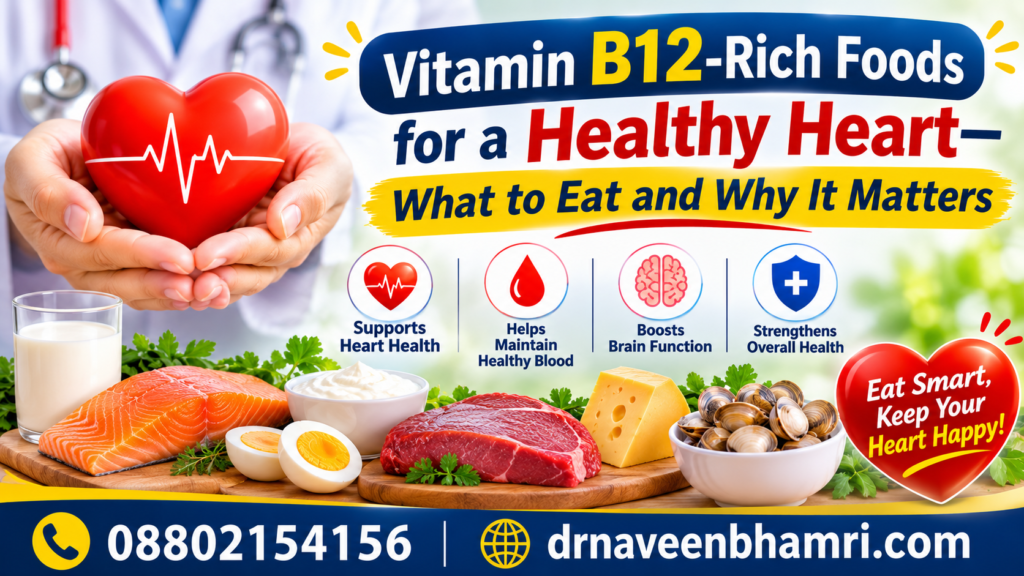
Plants don’t make vitamin B12, so most natural sources come from animal foods. The trick is to pick options that give you enough B12 without loading up on unhealthy fats:
- Fish: Fatty fish like salmon, mackerel (bangda), sardines (mathi), and tuna give you a double benefit: plenty of B12 plus heart-friendly omega-3 fats. Just one small serving of salmon or tuna can cover your daily B12 needs. Choose grilled, steamed, or curry-style fish over deep-fried.
- Shellfish: Clams, mussels, and oysters are among the richest sources of B12 you can find, often providing many times your daily need in one serving. Cook them with garlic, tomatoes, and a little oil to keep them light.
- Lean Meat and Chicken: Lean mutton and skinless chicken also provide B12, though chicken has smaller amounts. Keep portions moderate, trim visible fat, and grill or roast instead of frying.
If you have a heart condition or high cholesterol, a doctor for heart problems Delhi can help you choose the right foods and portions for your heart.
I swapped beef for mutton to suit an Indian audience and replaced some imported fish with ones easily found in Delhi. I also removed most exact numbers to keep it simple and easy to read.
3. Vegetarian-Friendly Dairy and Egg Sources
- Milk, Curd, and Paneer: A glass of milk gives you around 1 microgram of B12, and a bowl of plain curd gives about the same. Interestingly, your body absorbs B12 from dairy better than from meat, fish, or eggs. Try swapping sugary snacks for a bowl of plain dahi with fruit and a few walnuts for an easy, heart-friendly boost.
- Whole Eggs: For most people, eggs in moderation fit well into a heart-healthy diet. Two eggs give you nearly half your daily B12 needs. Eat the whole egg, as most of the B12 is found in the yolk.
If you have high cholesterol or a heart condition, check with a heart doctor in Delhi about how many eggs and how much dairy are right for you.
4. Plant-Based and Fortified B12 Options
If you follow a fully plant-based diet, regular fruits, vegetables, and even fermented foods like dosa batter or mushrooms won’t give you enough B12. Instead, look for foods that have B12 added to them:
- Fortified Nutritional Yeast: This cheesy-tasting seasoning works well on popcorn, pasta, or roasted veggies, and just a spoonful or two can cover your daily B12 needs.
- Fortified Plant Milks and Cereals: Many soy, oat, and almond milks, as well as some breakfast cereals, have B12 added. A bowl of fortified cereal with fortified soy milk is an easy way to start your day. Always check the label, as amounts vary by brand.
If you’re vegan or vegetarian and worried about low B12 or your heart health, a cardiologist in Delhi can guide you on tests and whether you need a supplement.
5. Why Eating B12 Isn’t Always Enough
Sometimes the problem isn’t what you eat, but how well your body absorbs it. To take in B12 from food, your body needs enough stomach acid and a special protein called intrinsic factor.
After the age of 50, stomach acid naturally goes down. Taking acidity medicines (like pantoprazole or omeprazole) or the diabetes medicine metformin for a long time can also make it harder to absorb B12.
If any of this applies to you, or if you’re vegan, often feel tired, notice tingling in your hands and feet, or have trouble focusing, ask your doctor for a simple blood test. If your levels are low, your doctor may suggest a supplement or, in some cases, B12 injections to bring them back up. Please don’t stop any prescribed medicine on your own.
6. Simple Ways to Add More B12 to Your Week
- Start your day right: Have an egg bhurji with spinach, or a bowl of fortified cereal with fortified milk.
- Make lunch count: Add a glass of chaas or a bowl of curd to your meal, or try a light fish curry with rice or roti.
- Snack smarter: Swap biscuits or namkeen for plain dahi with fruit, or sprinkle fortified nutritional yeast on popcorn or roasted veggies.
Final Thoughts
Taking care of your heart doesn’t mean giving up tasty food or living on boiled vegetables. With a few smart food choices and simple daily habits, you can keep your B12 levels healthy, help control homocysteine, and give your heart the steady support it needs. If you’d like a personalized plan to protect your heart for the long run, consult a trusted preventive cardiology doctor in Delhi.
Frequently Asked Questions
Low B12 can raise homocysteine and cause anemia, which may put extra strain on the heart.
Common signs include tiredness, weakness, tingling in hands and feet, pale skin, and breathlessness.
B12 supplements can lower homocysteine, but studies haven’t shown that they directly prevent heart attacks.
Vegetarians, older adults, people with stomach problems, and those taking metformin or acid-reminding medicines are at higher risk.