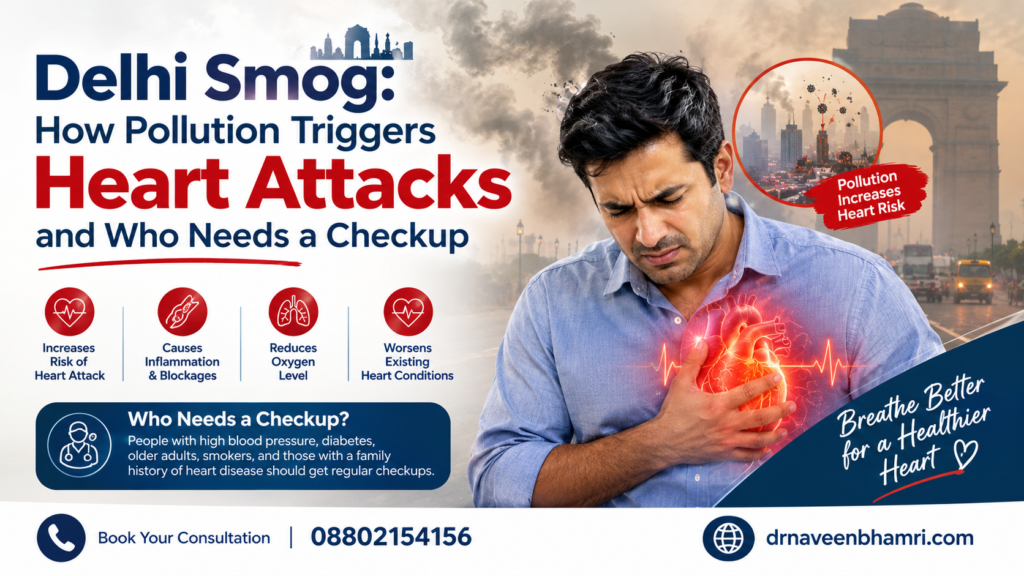
Every winter, a grey haze settles over Delhi. While most people worry about burning eyes, a scratchy throat, or a persistent cough, air pollution poses a more serious risk: it can increase the risk of heart attacks.
Research links fine air pollution to an increased risk of heart attacks, strokes, and irregular heart rhythms, sometimes within hours or days of exposure.
In this blog, Dr. Naveen Bhamri, Chairman & HOD of Cardiology at MaxSuper Speciality Hospital, Shalimar Bagh, explains how smog affects your heart and the warning signs to watch for. Consult a heart specialist in North Delhi to understand your cardiovascular risks.
How Does Pollution Trigger a Heart Attack?
The biggest culprit in Delhi’s smog is PM2.5, tiny particles about 30 times thinner than a human hair. These particles can penetrate deep into the lungs and contribute to inflammation and damage throughout the cardiovascular system.
Here’s what happens next:
- Inflammation in the Arteries: PM2.5 triggers inflammation, making existing cholesterol plaques more likely to rupture.
- Higher Clotting Risk: Pollution can increase blood clotting, potentially blocking an artery and triggering a heart attack.
- Rising Blood Pressure: Polluted air can narrow blood vessels, raising blood pressure and straining the heart.
- Irregular Heartbeat: Exposure can disrupt normal heart rhythms, especially in people with existing heart conditions.
- Long-Term Artery Damage: Prolonged exposure can accelerate plaque buildup in the arteries, a condition called atherosclerosis.
In simple terms, smog affects more than your lungs; it can also put your heart at risk. Consulting an experienced cardiologist in Delhi can help you understand your cardiovascular risks and take preventive steps.
Who Needs a Heart Checkup This Smog Season?
While air pollution affects everyone, certain people face a higher risk of heart complications. You should consider a heart checkup if you:
- Are above 40 or above 30 with a family history of heart disease.
- Have diabetes, high blood pressure, or high cholesterol.
- Smoke or have recently quit smoking.
- Are overweight or lead a sedentary lifestyle.
- Have a history of heart attack, angioplasty, bypass surgery, or heart failure.
- Commute through heavy traffic daily or work outdoors.
- Experience unusual breathlessness, fatigue, or chest discomfort.
Heart problems can develop without obvious symptoms. Consulting a Heart doctor in North Delhi can help assess your risk and identify potential issues early.
What Does a Heart Checkup Include?
A heart checkup typically begins with a consultation, followed by tests based on your symptoms and risk factors. Common tests include:
- ECG: Checks your heart’s rhythm and electrical activity.
- Echocardiogram (2D Echo): Uses ultrasound to assess heart function and valves.
- Lipid Profile: Measures cholesterol and triglyceride levels.
- Blood Sugar and Blood Pressure Tests: Help identify diabetes and hypertension.
- TMT (Stress Test): Evaluates how your heart responds to physical activity.
- CT Coronary Angiography: Helps detect coronary artery blockages when medically indicated.
Consult a heart specialist in Delhi NCR to determine which tests are appropriate for your heart health.
As an interventional cardiologist in North Delhi, Dr. Naveen Bhamri offers complete heart care, from prevention to advanced treatment:
- Preventive Cardiology: It focuses on reducing the risk of cardiovascular diseases affecting the heart and blood vessels. It aims to identify risk factors early and prevent serious complications, such as heart attacks and strokes, through timely intervention.
Cardiologists, dietitians, and other healthcare professionals work together to create personalized plans that manage risk factors, improve heart health, and prevent future cardiovascular problems.
- Lipid and Cholesterol Management: High levels of cholesterol and other lipids can increase the risk of coronary artery disease, heart disease, and stroke. Managing these levels through a balanced diet, regular exercise, and medication when necessary can help protect your heart.
Lipids are fats that support essential body functions, while cholesterol is produced by the liver and found in foods such as meat, eggs, and dairy products.
- Clinical Cardiology: It focuses on diagnosing and treating heart conditions, including coronary artery disease, heart rhythm disorders, and heart failure. It involves evaluating symptoms and assessing overall cardiovascular health.
Treatment may include medications, lifestyle changes, and specialized procedures based on individual needs. Regular consultations and timely diagnosis help manage heart conditions and reduce the risk of complications.
- Coronary Intervention: Coronary intervention involves procedures to open narrowed or blocked coronary arteries and restore blood flow to the heart. Common procedures include angioplasty, which widens the artery using a balloon, and stent placement, which helps keep it open.
Consult an experienced cardiologist in India for appropriate evaluation and treatment of coronary artery disease.
- Device Implant: Device implantation involves placing medical devices, such as pacemakers and implantable cardioverter-defibrillators (ICDs), to manage abnormal heart rhythms and certain cardiac conditions.
These devices help regulate the heartbeat and, depending on the type, can prevent life-threatening rhythm disturbances and improve heart function.
- Structural Heart (TAVI and TEER): Structural heart procedures treat problems affecting the heart’s valves and structure. TAVI (Transcatheter Aortic Valve Implantation) replaces a narrowed aortic valve without open-heart surgery.
TEER (Transcatheter Edge-to-Edge Repair) is a minimally invasive procedure that helps reduce leakage in a faulty heart valve, improving heart function and symptoms.
How to Protect Your Heart During Smog Season?
- Check the AQI daily and plan outdoor activities when air quality is better.
- Wear a well-fitted N95 mask when you step outside.
- Use an air purifier at home, especially in the bedroom.
- Keep windows closed during peak pollution hours.
- Eat a heart-friendly diet rich in fruits, vegetables, and whole grains, and limit fried and salty foods.
- Quit smoking, since smoking and pollution together multiply heart risk.
- Stay hydrated and manage stress with good sleep and relaxation.
Protect Your Heart This Winter
Protect your heart this winter with a timely checkup. Consult Dr. Naveen Bhamri, cardiologist at Max Super Speciality Hospital, Shalimar Bagh, for expert cardiac care and guidance from a leading TAVI specialist in India.
Book your heart consultation today by clicking “Book Appointment” or “Consult with Doctor.”
Frequently Asked Questions
Protect your heart this winter with a timely checkup. Consult Dr. Naveen Bhamri, cardiologist at Max Super Speciality Hospital, Shalimar Bagh, for expert cardiac care and guidance from a leading TAVI specialist in India.
People over 40 and those with diabetes, high blood pressure, high cholesterol, or existing heart disease.
It’s safer to exercise indoors on high-AQI days. People with heart conditions should consult their cardiologist.
It depends on your age and risk factors. Consult your cardiologist to determine the right frequency.