
Coronary Intervention | Dr. Naveen Bhamri
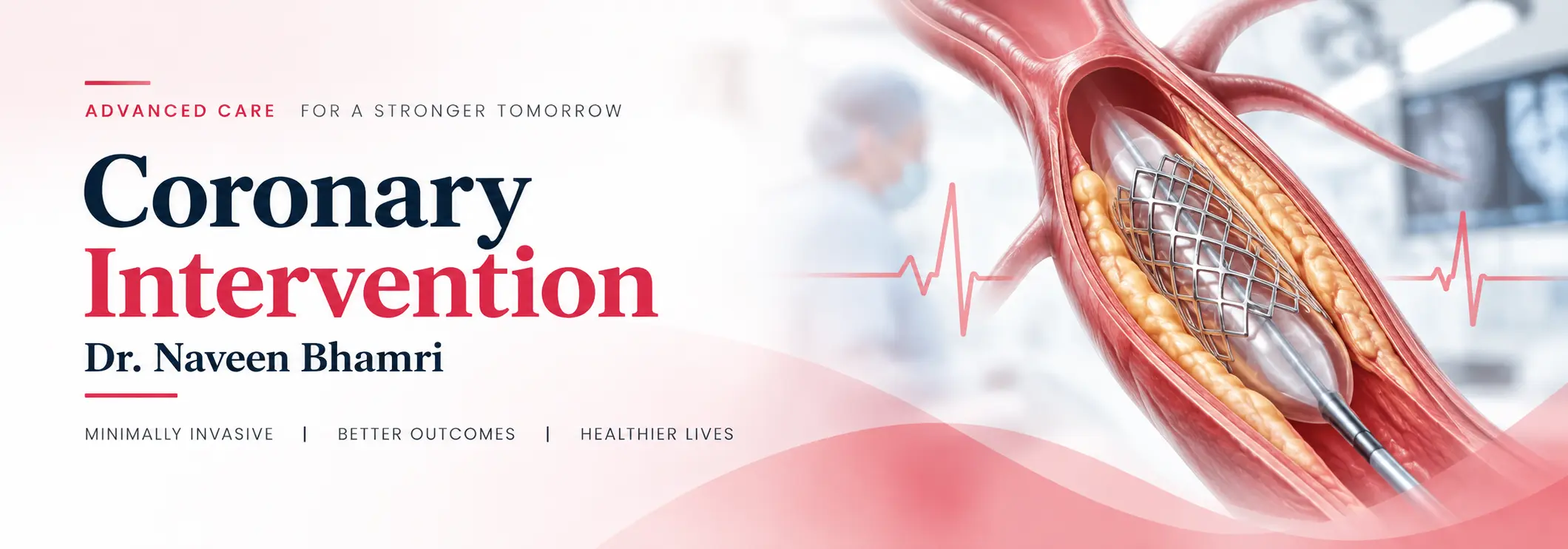
Coronary intervention refers to minimally invasive procedures used to restore blood flow through narrowed or blocked heart arteries. It is commonly considered when coronary artery disease causes significant blockage, symptoms, or a risk of reduced blood supply to the heart muscle. Dr. Naveen Bhamri is the best cardiologist in Max-BLK & Max Shalimar Hospital specialises in coronary angioplasty, stent procedures, and complex coronary interventions, including CTO treatment, rotablation, orbital atherectomy, drug-coated balloon (DCB), and stentless angioplasty. His approach combines detailed coronary assessment with the most appropriate intervention for each patient.
What is Coronary Intervention?
Coronary intervention is a catheter-based treatment used to open narrowed or blocked coronary arteries. The procedure is generally performed through a blood vessel in the wrist or groin, with radial (wrist) access commonly used when appropriate. During angioplasty, a thin catheter is guided to the affected artery. A balloon is sometimes used to widen the narrowed segment, and a stent may be placed to help maintain blood flow.
But remember that not every blockage requires a stent. Depending on the artery, lesion characteristics, and clinical situation, options such as drug-coated balloons or stentless angioplasty may be considered. For complex disease, advanced techniques such as CTO intervention, rotablation, and orbital atherectomy may be required.
When is Coronary Intervention Recommended?
The decision of coronary intervention depends on symptoms, the severity and location of blockage, overall heart health, and the findings of cardiac investigations. Coronary intervention as a cardiac solution be considered in situations such as:
- Significant coronary artery narrowing affecting blood flow
- Persistent or recurrent angina despite medical treatment
- Acute coronary syndrome or heart attack
- High-risk or complex coronary artery disease
- A chronic total occlusion (CTO)
- Calcified coronary blockages that require specialized techniques
- Significant blockage identified during coronary angiography
Top heart surgeons always aim to restore or improve blood flow while selecting the safest and most appropriate treatment strategy.
Symptoms or Signs You Should Not Ignore
Seek medical evaluation if you experience:
- Chest pressure, tightness, or discomfort
- Breathlessness, particularly with exertion
- Pain spreading to the arm, shoulder, jaw, back, or neck
- Unusual sweating or nausea with chest discomfort
- Reduced exercise tolerance
- Unexplained fatigue
- Symptoms that are new, worsening, or occurring at rest
Sudden or severe chest pain, breathlessness, sweating, or other symptoms suggestive of a heart attack require urgent medical attention.
How is Coronary Disease Diagnosed?
Depending on the clinical situation, evaluation may include:
- ECG
- Echocardiography
- Stress testing
- CT coronary angiography
- Coronary angiography
- Optical Coherence Tomography (OCT)
- Intravascular Ultrasound (IVUS)
OCT and IVUS provide detailed imaging from inside the coronary artery and can help assess plaque, vessel dimensions, and stent placement in selected cases.
Coronary Intervention Treatment Options
A heart specialist suggests either or the combination of these treatment options depending on the condition of patients for better recovery and a healthy heart.
Lifestyle and Risk-Factor Management :
Managing blood pressure, diabetes, cholesterol, smoking, weight, diet, and physical activity is an important part of coronary disease care.
Medications :
Depending on the condition, treatment may include medicines to control symptoms, reduce cholesterol, prevent blood clots, and manage cardiovascular risk factors.
Interventional Treatment :
When intervention is appropriate, coronary angioplasty can restore blood flow through a narrowed artery. Stenting may be performed when required.
Advanced & Complex Coronary Procedures :
Some blockages require specialized techniques. Dr. Bhamri’s expertise includes CTO interventions, rotablation, orbital atherectomy, DCB, and stentless angioplasty, along with coronary imaging using OCT and IVUS.
Never push your doctor to something you read on the internet or heard from some relatives. The choice of procedure depends on the patient’s symptoms, anatomy, blockage characteristics, and overall cardiovascular risk. So, even if you’re not satisfied, take a second opinion from another cardiologist, but never from random people.
For personalised assessment and treatment of coronary artery disease, consult Dr. Naveen Bhamri to determine the most appropriate coronary intervention for your condition. Book consultation here.