
Device Implant for Heart | Dr. Naveen Bhamri
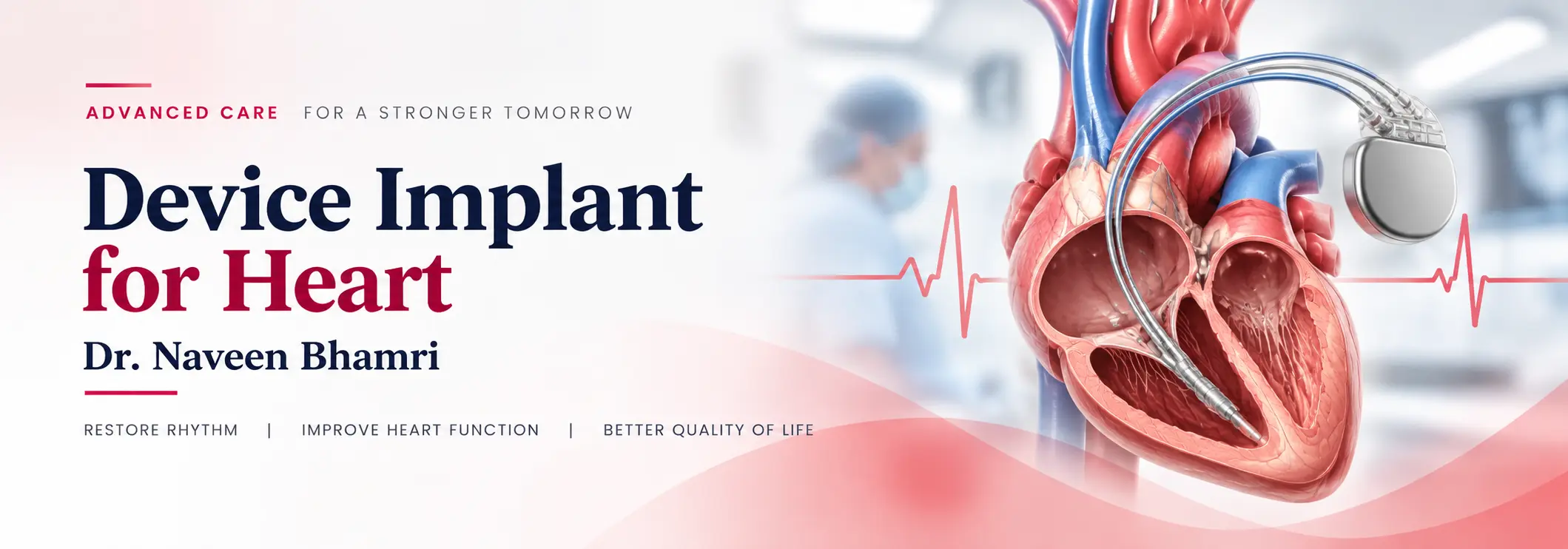
Cardiac device implantation involves placing a specialized device to support the heart’s electrical activity, rhythm, or pumping function when the heart’s natural system is not working adequately. Depending on the underlying condition, a patient may require a pacemaker, implantable cardioverter-defibrillator (ICD), or cardiac resynchronization therapy (CRT) device. Dr. Naveen Bhamri is the Cardiac device implantation doctor in delhi and the cardiologist specialist at Max-BLK Hospital in Shalimar Bagh, specializes in cardiac rhythm disorders and device implantation, including leadless pacemaker implantation.
What is a Cardiac Device Implant?
A cardiac device is an implanted system designed to address specific problems with the heart’s electrical activity or pumping function. For patients looking for the Cardiac device implantation doctor in delhi, the appropriate device may:
- Maintain an appropriate heart rate when the heart beats too slowly
- Detect and treat potentially dangerous abnormal heart rhythms
- Help coordinate the contraction of the heart’s chambers in selected patients with heart failure
The type of device is determined by the underlying rhythm disorder, heart function, symptoms, medical history, and individual clinical requirements.
Types of Cardiac Devices
Multiple types of cardiac devices can be recommended by your cardiologist depending on the condition and multiple factors.
1. Pacemaker
A pacemaker helps regulate the heartbeat when the heart beats too slowly or electrical signals between different parts of the heart are disrupted. A conventional pacemaker generally consists of a pulse generator and one or more leads that deliver electrical impulses to the heart. A leadless pacemaker is an alternative in selected patients. It is a small self-contained device implanted inside the heart without traditional pacing leads or a chest pocket.
2. Implantable Cardioverter-Defibrillator (ICD)
An ICD is designed to continuously monitor the heart rhythm and detect potentially life-threatening abnormal rhythms, particularly certain types of ventricular tachycardia or ventricular fibrillation. When necessary, it can deliver electrical therapy to restore a safer heart rhythm.
An ICD may be considered in selected patients at increased risk of sudden cardiac arrest based on their underlying heart condition, heart function, rhythm history, and overall clinical assessment.
3. Cardiac Resynchronization Therapy (CRT)
CRT is a specialized pacing therapy used in selected patients with heart failure and abnormal electrical conduction. It coordinates the contraction of the heart’s ventricles, which can improve the efficiency and synchrony of the heartbeat in appropriate patients.
When is a Cardiac Device Recommended?
A device may be recommended in situations such as:
- Significant or persistent bradycardia
- Certain types of heart block
- Recurrent dizziness or fainting associated with an abnormal rhythm
- High risk of potentially dangerous ventricular arrhythmias
- Previous serious ventricular rhythm disturbances
- Selected patients with heart failure and electrical conduction abnormalities
- Situations where long-term pacing or rhythm protection is clinically required
Symptoms or Signs You Should Not Ignore
Seek cardiac evaluation if you experience:
- Recurrent dizziness or light-headedness
- Unexplained fainting or near-fainting
- Persistent unusual fatigue
- Breathlessness during routine activity
- Reduced exercise tolerance
- Awareness of an unusually slow or irregular heartbeat
- Episodes of weakness associated with an abnormal pulse
- Episodes of weakness associated with an abnormal pulse
- Palpitations or sudden episodes of rapid heartbeat
Sudden fainting, severe breathlessness, or chest discomfort requires immediate medical assessment at a top cardiology hospital.
How Are Structural Heart Conditions Diagnosed?
Evaluation may include:
- Electrocardiogram (ECG)
- Holter or ambulatory rhythm monitoring
- Echocardiography
- Assessment of left ventricular function
- Blood tests, when clinically indicated
- Review of medications and medical history
- Additional rhythm evaluation when required
The objective is to identify the underlying electrical or cardiac problem and determine which device, if any, is appropriate.
Cardiac Device Implantation: What to Expect
Life After Device Implantation in Heart
A cardiac device is designed for long-term support, but regular follow-up remains important. Patients are generally advised to:
- Attend scheduled device checks
- Follow wound-care instructions after implantation
- Take prescribed medicines as directed
- Gradually return to physical activity according to medical advice
- Report new dizziness, fainting, palpitations, or breathlessness
- Keep their device identification and medical information accessible
Periodic monitoring helps assess device function, battery status, and other programmed parameters.
Pacemaker Implantation with Dr. Naveen Bhamri
Dr. Naveen Bhamri is the Cardiac device implantation doctor in delhi, with expertise in cardiac rhythm disorders, pacemaker implantation, and leadless pacemaker implantation. His approach focuses on identifying the underlying cardiac problem and selecting the appropriate device and implantation strategy for each patient.
With more than 27 years of professional experience, he has performed more than 1,500 device implantations along with 70,000+ other cardiac procedures, including angiography and TAVI. If you have been advised to consider a pacemaker, ICD, or CRT, consult Dr. Naveen Bhamri for a detailed evaluation and an appropriate cardiac device treatment plan.