You’ve just finished a heavy dinner of chole bhature or a spicy biryani, and a few minutes later, a burning feeling spreads across your chest. Is it just acidity, or could it be your heart? It’s a question that worries countless people across Delhi every day, and for good reason. Heartburn and a heart attack can feel surprisingly alike, yet one is a common digestive problem while the other is a medical emergency where every minute counts. Knowing the key differences can help you act quickly and confidently, and if you’re ever unsure, reaching out to a trusted chest pain doctor in Delhi is always the safest step.
Why Do Heartburn and a Heart Attack Feel So Alike?
The heart and food pipe sit side by side in the chest and share nerve pathways, so the brain can’t always tell where pain is coming from.
Heartburn happens when stomach acid irritates the food pipe, while a heart attack occurs when a blocked artery cuts off blood to the heart muscle. Since both cause pain in the same area, doctors often need an ECG and blood tests to tell them apart, which is why seeing a doctor for heart problems in Delhi NCR is important when symptoms feel unusual.
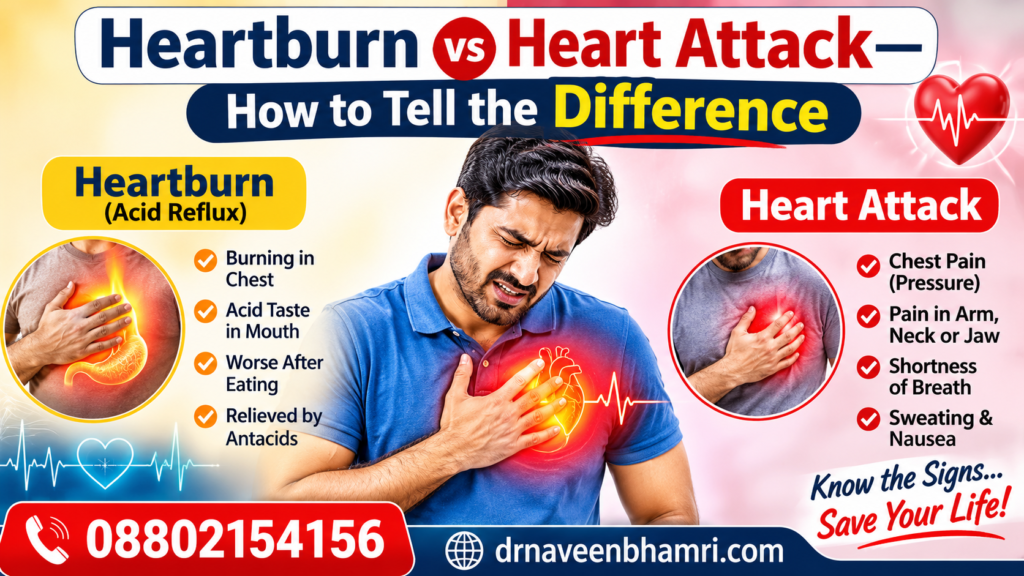
Signs It’s More Likely Heartburn
- It follows a meal: The burning often starts after heavy, oily, or spicy food, like a late-night paratha or pakoras.
- Lying down makes it worse: Bending forward or lying flat soon after eating can bring the burning back.
- You taste something sour: A bitter or acidic taste in the mouth, or food coming back up, often points to acid reflux.
- It feels like burning, not squeezing: Heartburn feels hot and sharp, rather than heavy or tight.
- Antacids help: The pain often eases after an antacid, though this alone doesn’t rule out a heart problem.
If these symptoms keep coming back or you’re ever unsure, a cardiologist consultation in Shalimar Bagh can help rule out anything serious. Read More Blog : Early Warning Signs of Heart Problems You Should Never Ignore
Signs It Could Be a Heart Attack
- Pressure or heaviness: A tight, squeezing, or heavy feeling in the middle of the chest that lasts a few minutes or fades and comes back.
- Pain that spreads: Discomfort moving to the left arm, both arms, back, neck, jaw, or upper stomach.
- Breathlessness: Struggling to breathe, sometimes even without chest pain.
- Other warning signs: Cold sweat, nausea, dizziness, sudden weakness, or unusual tiredness.
Women often notice nausea, fatigue, or breathlessness rather than chest pain, and people with diabetes may feel very little pain at all. If you notice these signs, call 112 or 108 right away. Many heart attacks are caused by blocked arteries, so timely heart blockage treatment in Delhi can protect your heart and prevent future attacks.
What Should You Do If You’re Not Sure?
When in doubt, treat chest pain as a heart problem until proven otherwise. If the discomfort is new, unexplained, or comes with any warning signs, call 112 or 108 for an ambulance straight away, even if the pain feels mild. Don’t wait to see if it passes, and don’t drive yourself to the hospital.
If you only get occasional heartburn with no other symptoms, simple changes can help, like eating smaller meals, cutting down on spicy and oily food, and avoiding lying down right after eating. But if heartburn keeps returning or doesn’t improve, it’s worth getting checked.
Symptoms alone can’t always tell heartburn and a heart attack apart, so it’s always safer to get emergency care first. For ongoing chest discomfort or regular heart check-ups, consult an experienced heart doctor in Delhi NCR.
How Much Do Heartburn and Heart Attack Symptoms Overlap?
Quite a lot. Heartburn, angina (chest pain from reduced blood flow to the heart), and a heart attack can feel almost the same, and even skilled doctors can’t always tell them apart just by asking questions or examining you. That’s why chest pain in the emergency room is always checked with quick tests like an ECG and blood tests first. For ongoing chest discomfort, a trusted cardiologist in Shalimar Bagh can help find the real cause.
Frequently Asked Questions
Acidity often causes burning after meals, while heart-related pain may feel like pressure or tightness, but symptoms can overlap.
Yes, some people experience burning, indigestion-like discomfort or a sensation of pressure during a heart attack.
Heart attack pain commonly occurs in the center or left side of the chest and may spread to the arms, jaw, neck, or back.
Heartburn typically does not cause arm pain, which can be a warning sign of a heart-related problem.
Heartburn may last minutes to hours, while heart attack discomfort can persist or come and go.
No, antacid relief cannot reliably rule out a heart attack.
Seek immediate emergency medical attention for new, unexplained, or persistent chest pain, especially with breathlessness, sweating, nausea or dizziness.
Yes, heart attack symptoms can sometimes feel like severe heartburn or indigestion.
Yes, some people experience indigestion, nausea, bloating, or burping during a heart attack
Yes, some heart attacks cause breathlessness, nausea, sweating, fatigue, or jaw and back pain without obvious chest pain.