

Chest pain changes decision-making fast. One hospital visit. One angiogram report. Then suddenly, families hear words like “blockage”, “angioplasty”, and stent. Most patients immediately ask the same thing: Do I really need a stent? The confusion is understandable because many people still think angioplasty is equal to open-heart surgery. It is not.
Stent treatment in Delhi usually refers to angioplasty with coronary stenting, also called PCI (catheter-based artery opening treatment). The procedure helps restore blood flow inside blocked heart arteries without opening the chest. Since Delhi has become one of the biggest cardiac treatment hubs in India, patients from multiple states travel here for advanced heart care. Dedicated cardiac centres in Delhi have advanced cath labs, emergency response systems, and interventional cardiology teams available round the clock.
What is Stent Treatment?
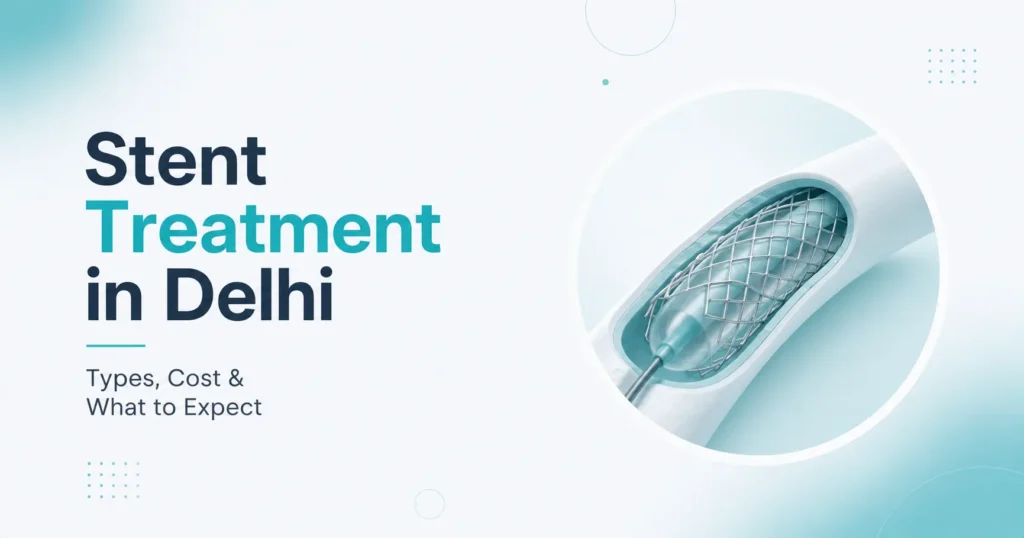
A stent is a small expandable mesh tube placed inside a narrowed coronary artery. Its purpose is simple: keep blood flowing properly toward the heart muscle. During angioplasty, the cardiologist first opens the blockage using a tiny balloon. After that, the stent expands and stays permanently inside the artery to support blood flow.
Most procedures are minimally invasive. Patients usually remain awake during treatment with mild sedation for comfort. Since the catheter is commonly inserted through the wrist artery, recovery is often quicker compared to older groin-based methods
Why Angioplasty Becomes Necessary
Many heart blockages develop slowly over years. Cholesterol deposits gradually narrow the arteries supplying oxygen-rich blood to the heart. Here is the problem. Symptoms may stay silent until the blockage becomes severe.
Some patients notice:
- Chest heaviness
- Breathlessness during walking
- Jaw or shoulder pain
- Sweating with exertion
- Sudden fatigue
Types of Stents Available in Delhi
Not every stent behaves the same way. The stent type affects long-term artery healing, medication duration, and treatment outcomes.
Drug-Eluting Stents (DES):
Drug-eluting stents are now considered the standard option worldwide. These metallic stents release slow-acting medication that lowers the risk of restenosis (artery narrowing again) after treatment. Because of better long-term outcomes, they account for more than 95% of angioplasty procedures in Delhi’s private hospitals. Most patients undergoing angioplasty today receive DES unless there is a strong medical reason to avoid them.
Bioresorbable Vascular Scaffolds (BVS): ‘
These are dissolvable scaffolds made from specialised polymers. Unlike traditional metallic stents, the structure slowly dissolves over 2 to 3 years after supporting the artery initially. Some patients prefer this technology because no permanent metal remains later. However, these scaffolds are not suitable for every blockage pattern or artery size.
Bare-Metal Stents (BMS):
Bare-metal stents are older-generation metal mesh tubes without medicine coating. Since they carry a higher chance of artery re-narrowing, they are rarely used today. Cardiologists may still consider them in selected emergency situations where long-term blood-thinning medicines cannot be safely continued.
Drug-Coated Balloons (DCB) — The Stentless Option:
Drug-Coated Balloons represent one of the most significant advances in modern angioplasty. Unlike conventional stenting, a DCB procedure opens the blocked artery and delivers anti-restenosis medication directly into the vessel wall — without leaving any permanent metal or polymer behind. This approach is also called stentless angioplasty or metalless angioplasty.
The balloon is coated with a drug (typically Paclitaxel or Sirolimus) that transfers into the artery wall during brief inflation. Once the balloon is withdrawn, the artery remains open with no implant left inside. Because there is no permanent stent, the artery retains its natural flexibility and the risk of long-term stent-related complications is significantly reduced.
Dr. Naveen Bhamri is among the leading proponents of DCB technology in Delhi. Approximately 30% of all angioplasty procedures performed by Dr. Bhamri now use Drug-Coated Balloons — one of the highest DCB utilisation rates among interventional cardiologists in Delhi NCR. This reflects a deliberate shift toward implant-free treatment wherever the artery anatomy and blockage pattern permit.
DCB angioplasty is particularly suitable for:
- In-stent restenosis (blockage recurring inside a previously placed stent)
- Small vessel coronary disease where stent placement is technically challenging
- Bifurcation lesions (blockages at artery branch points)
- Patients who prefer to avoid a permanent implant inside their arteries
- Cases where a shorter duration of blood thinner medicines is medically preferred
While DCB is not suitable for every blockage type, its growing use reflects a broader movement in interventional cardiology toward less invasive, implant-free treatment strategies wherever clinically appropriate.
What to Expect Before Angioplasty
Most patients fear uncertainty more than the procedure itself. The process is usually systematic and planned. Before treatment, doctors commonly review:
- Blood investigations
- ECG findings
- Echocardiography reports
- Coronary angiogram results
The angiogram acts like a roadmap. It shows the exact artery location, blockage percentage, and blood flow restriction before the cardiologist proceeds with treatment planning.
What Happens During the Procedure
Angioplasty is performed inside a specialised cardiac cath lab. Patients usually stay awake with mild sedation. Local anaesthesia numbs the entry area before the catheter is inserted. The cardiologist generally accesses the artery through the radial artery (wrist access) or femoral artery (groin access).
A thin catheter travels toward the heart under live imaging guidance. Contrast dye highlights the blocked segment on monitors. Once positioned correctly, the balloon opens the narrowed artery, and the stent expands permanently against the vessel wall. The procedure usually lasts 30 to 60 minutes.
Recovery After Stent Placement
Recovery is often faster than many families expect. Since wrist access causes less movement restriction, patients may sit up or walk within hours after the procedure.
Typical Recovery Timeline
| Recovery Phase | What Patients Usually Experience |
| First Few Hours | Monitoring inside ICU or recovery unit |
| First 24 Hours | Mild wrist soreness or fatigue |
| 1–2 Days | Hospital discharge in stable cases |
| 1 Week | Gradual return to routine activity |
Minor discomfort near the puncture site is common. Some patients also feel temporary chest fluttering sensations. Severe chest pain, breathlessness, or excessive sweating after discharge should never be ignored.
Can Blockages Be Treated Without a Stent?
Sometimes yes. Sometimes no. That decision depends on symptoms, artery severity, and blood flow reduction. Patients with stable disease may initially receive blood thinners, cholesterol-lowering medicines, blood pressure management, and lifestyle modification plans.
Some cardiologists also recommend FFR (pressure-based blood flow assessment) before angioplasty. This test measures whether the blockage is truly reducing blood supply enough to justify stent placement. Since unnecessary procedures should be avoided, detailed evaluation matters.
Does Insurance Cover Angioplasty?
Most private insurance companies approve angioplasty because it is classified as a medical necessity. Coverage depends on room rent limits, consumable policies, corporate package rules, and network hospital approval. Government schemes like CGHS, ECHS, and Ayushman Bharat may also support eligible patients.
Patients should always keep their insurance card, doctor recommendation sheet, previous reports, and TPA approval documents ready before admission because paperwork delays can slow financial clearance.
Common Misconceptions About Stents
“A Stent Permanently Cures Heart Disease”
This is incorrect. A stent treats one blocked area. It does not stop future cholesterol buildup inside other arteries. Lifestyle correction remains essential even after successful angioplasty. Long-term heart protection requires daily medicines, walking routines, diabetes control, smoking cessation, cholesterol monitoring, and blood pressure management.
“Blood Thinners Can Be Stopped Once I Feel Better”
This mistake can become dangerous. After a drug-eluting stent is placed, the body initially treats it like a foreign surface. Doctors prescribe DAPT (dual antiplatelet blood thinner therapy) to prevent clot formation inside the stent. Stopping these medicines without cardiologist approval can trigger stent thrombosis — a sudden clot formation inside the stent — and lead to a massive heart attack.
Emergency Heart Attack Cases Need Fast Decisions
Families sometimes spend valuable time comparing hospital options during active chest pain emergencies. That delay can become harmful. If doctors suspect an ongoing heart attack, immediate blood flow restoration matters more than any other consideration. Ask one direct question first: “Is Primary PCI available immediately?”
That answer can decide heart muscle survival.
According to Dr. Naveen Bhamri, one of Delhi’s top heart specialists, angioplasty decisions should depend on symptom severity, artery blockage pattern, heart function, and blood flow compromise — not on urgency or pressure alone. Some patients urgently require intervention. Others may first benefit from medicines and observation. Since every coronary blockage behaves differently, treatment planning should remain individualised rather than protocol-driven.
Recommended Next Steps Before Admission
Before planning elective angioplasty, patients should clarify:
- Estimated stent count and procedure complexity
- IVUS or OCT imaging requirements
- Insurance approval status
- Post-procedure medicine duration
- Follow-up monitoring schedule
These discussions help reduce confusion and ensure patients are fully informed before the procedure. The goal is not simply placing a stent — the larger goal is protecting long-term heart function safely and responsibly.