
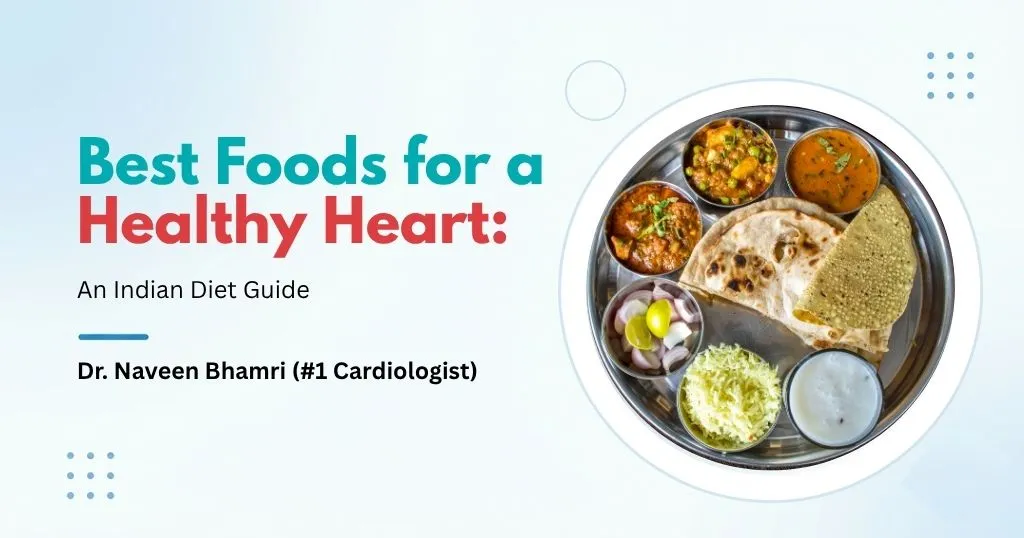

Your heart does not need an expensive “superfood” to stay healthy. It needs a consistent eating pattern built around whole grains, pulses, vegetables, fruits, nuts, seeds, and healthy fats, while keeping excess salt, sugar, and unhealthy fats under control. The best foods for a healthy heart are therefore often already present in an Indian kitchen: dal, millets, vegetables, fruits, nuts, and seeds. A heart-friendly diet can help manage cholesterol, blood pressure, blood sugar, and body weight, all of which influence cardiovascular risk.
Why Does Your Diet Matter for Heart Health?
Heart disease rarely develops because of one meal or one food. It usually reflects the cumulative effect of several risk factors, including high LDL cholesterol, hypertension, diabetes, obesity, smoking, physical inactivity, and an unhealthy dietary pattern.
A healthy diet for heart health works through several mechanisms:
- Dietary fiber can help improve cholesterol levels and support better blood sugar control.
- Potassium-rich fruits and vegetables can support healthy blood pressure, although people with kidney disease or certain medications may need individualized potassium advice.
- Unsaturated fats can replace saturated fats in the diet and improve the overall fat profile.
- Lower sodium intake can help control blood pressure.
- Whole grains and pulses provide fiber and nutrients while producing a slower rise in blood glucose than many refined carbohydrate foods.
WHO recommends at least 400 g of fruits and vegetables daily and advises adults to keep salt intake below 5 g per day. It also recommends keeping saturated fat below 10% of total energy intake and trans fat below 1%.
10 Best Foods for a Healthy Heart
Millets and Whole Grains
Jowar, Bajra, Ragi, Foxtail Millet, Oats, and Brown Rice can form the carbohydrate base of a heart-friendly Indian diet.
Unlike highly refined carbohydrates, whole grains provide dietary fiber and other nutrients. Oats are particularly useful because they contain beta-glucan, a soluble fiber associated with cholesterol-lowering effects.
Try:
- Jowar or Bajra Roti
- Ragi dosa
- Vegetable dalia
- Oats upma
- Brown rice with dal and vegetables
- Millet khichdi
You do not need to eliminate rice completely. Instead, focus on portion size, preparation, and overall meal balance.
Dal, Rajma, Chana, and Other Pulses
Indian dals and legumes are excellent sources of plant protein and fiber.
Moong dal, Masoor dal, Chana, Rajma, Kala Chana, and Sprouts can help you increase plant-based protein without relying heavily on foods high in saturated fat.
A simple Indian combination such as dal with roti and sabzi can provide a nutritionally balanced meal.
For better heart health, prepare dals with moderate oil and avoid making them unnecessarily heavy with butter, cream, or excessive ghee.
Green Leafy Vegetables
Make Palak, Methi, Sarson, Bathua, and other seasonal greens regular parts of your meals.
These vegetables provide fiber, potassium, folate, and several antioxidant compounds. Increasing vegetable intake also helps improve dietary variety without adding excessive calories.
Instead of overcooking vegetables or deep-frying them, use methods such as:
- Steaming
- Pressure cooking
- Light sautéing
- Stir-frying with limited oil
Vegetables and fruits are important sources of fiber, vitamins, minerals, and protective plant compounds, and higher intake is associated with lower cardiovascular risk.
Tomatoes, Beetroot, and Other Colorful Vegetables
Your plate should not be green alone.
Tomato, Beetroot, Carrots, Capsicum, Pumpkin, Okra (bhindi) , Bottle Gourd (Lauki), and other colorful vegetables provide different combinations of antioxidants, fiber, and micronutrients.
The goal is not to identify one “magic” vegetable. The goal is to eat a variety of vegetables regularly.
For example, instead of having aloo sabzi every day, rotate between:
Lauki → bhindi → palak → mixed vegetables → beans → tori → cauliflower → cabbage.
This simple rotation can make a traditional Indian diet substantially more diverse.
Walnuts, Almonds, and Seeds
Nuts and seeds can provide unsaturated fats, fiber, minerals, and other nutrients that support cardiovascular health.
Good choices include:
- Walnuts
- Unsalted almonds
- Flaxseeds (alsi)
- Chia seeds
- Pumpkin seeds
- Sunflower seeds
Flaxseeds and chia seeds provide alpha-linolenic acid (ALA), a plant-based omega-3 fatty acid. However, remember that nuts and seeds are calorie-dense. A small serving is enough. Choose unsalted nuts instead of heavily salted or masala-coated varieties.
Heart-Healthy Cooking Oils
Oil is not automatically unhealthy. The quantity and type of fat matter.
For an Indian kitchen, options such as mustard oil, groundnut oil, rice bran oil and sesame oil can be incorporated depending on regional cooking practices and individual dietary needs.
The important principle is moderation.
Do not pour multiple oils into the same meal assuming that “healthy oil” cancels excessive quantity. Total visible fat intake still matters.
Also, avoid repeatedly heating or reusing cooking oil. Industrial trans fats are strongly associated with cardiovascular harm, and the WHO recommends keeping trans fat intake below 1% of total energy intake.
Amla, Guava, Papaya, and Other Whole Fruits
Whole fruits are a better everyday choice than fruit juices.
Amla, guava, papaya, oranges, apples, pomegranate, and seasonal local fruits provide fiber, vitamins, minerals, and plant compounds.
A common misconception is that people with heart concerns should avoid fruits because they contain natural sugar. In most cases, whole fruit in appropriate portions is part of a balanced diet.
The bigger concern is often sweetened beverages, packaged juices, and desserts, which can add substantial free sugar without providing the same fiber and satiety.
Fatty Fish for Non-Vegetarians
If you eat fish, varieties such as sardines, hilsa, and other oily fish can contribute omega-3 fatty acids. Fish can be prepared by grilling, baking, steaming, or lightly cooking rather than deep-frying or excessive salt. .
For someone with established heart disease, high triglycerides, or other cardiovascular conditions, the appropriate quantity and type of fish should be considered alongside the person’s complete diet and medical treatment.
Low-Fat Dairy and Protein Alternatives
Plain curd, lower-fat dairy options, tofu and moderate portions of paneer can provide protein and calcium. The overall amount and preparation method matter.
A bowl of plain curd is very different nutritionally from a sugar-loaded flavored dairy dessert. Similarly, paneer cooked with large quantities of butter or cream is not equivalent to a moderate serving of low-fat paneer prepared with vegetables.
Garlic, Ginger, Turmeric, and Other Spices
Indian cooking has a major advantage: flavor does not have to come entirely from salt.
Garlic, ginger, turmeric, coriander, cumin, cinnamon, and amla can add flavor and variety while helping reduce dependence on excessive salt.
However, spices should complement a heart-healthy diet—not be marketed as replacements for cholesterol medicines, blood-pressure treatment, or other medical therapy.
What Should You Limit for Better Heart Health?
Knowing what to reduce is just as important as knowing what to eat.
| Unhealthy / High-Risk Choice | Heart-Healthy Indian Alternative | Cardiovascular Benefit |
| Deep-fried snacks (Pakora, Namkeen) | Roasted Makhana, Chana, or Walnuts | Lowers trans fat & sodium intake |
| High-ghee / Butter preparation | Cold-pressed Mustard or Groundnut oil | Provides monounsaturated fats (MUFA) |
| Refined Maida & White Rice | Jowar, Bajra, Ragi, or Oats Upma | Rich in beta-glucan & soluble fiber |
| Packaged Fruit Juices / Mithai | Whole Amla, Guava, or Papaya | High dietary fiber, prevents glucose spikes |
High-Sodium Foods
Excess sodium can raise blood pressure, increasing cardiovascular risk.
Limit:
- Pickles and achaar
- Papad
- Namkeen
- Salted nuts
- Packaged soups
- Instant noodles
- Processed snacks
- Salt-heavy chutneys and sauces
- Restaurant and packaged foods
WHO recommends less than 5 g of salt per day, equivalent to less than 2,000 mg of sodium for adults.
If you already have hypertension, heart failure, or kidney disease, your doctor may recommend a more specific sodium restriction.
Deep-Fried and Highly Processed Foods
Samosa, pakora, bhatura, puri, and other deep-fried foods do not need to disappear from your life forever, but they should not become everyday staples.
Similarly, biscuits, cakes, pastries, wafers, and packaged fried snacks may contain unhealthy fats, refined carbohydrates, salt, and added sugars.
Limit highly processed foods high in sodium, free sugars, and unhealthy fats, and replace saturated and trans fats with healthier unsaturated fats. .
Excess Ghee, Butter, and Cream
A common Indian belief is that adding more ghee automatically makes a meal healthier. It does not.
Ghee and butter contain substantial amounts of saturated fat. If you consume them frequently or in large quantities, they can make it difficult to maintain a heart-friendly fat profile.
You do not necessarily need to eliminate ghee completely. Portion control matters.
Refined Carbohydrates and Sugary Foods
Limit frequent consumption of:
- Maida-based foods
- White bread
- Sweetened breakfast cereals
- Sugary drinks
- Mithai
- Cakes and pastries
- Biscuits
- Desserts
Replacing refined carbohydrates with whole grains, pulses, vegetables, and other minimally processed foods can improve the overall nutritional quality of the diet.
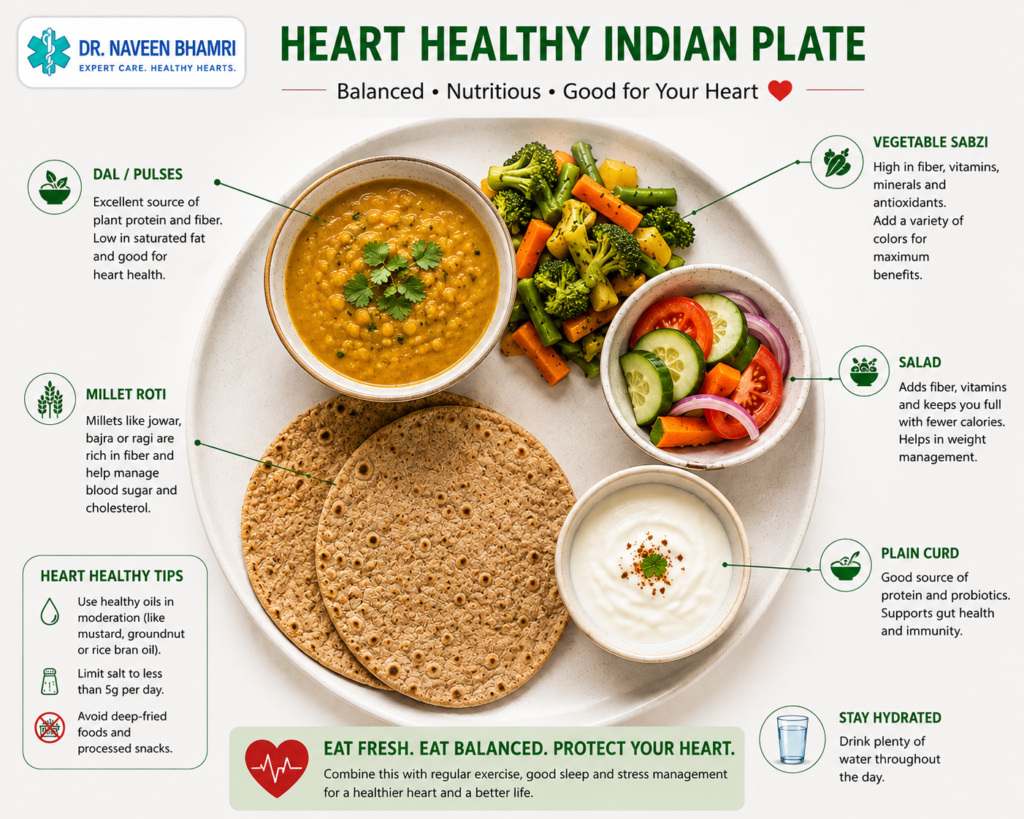
What Does a Heart-Healthy Indian Plate Look Like?
You do not need a complicated diet chart to start eating better.
A practical meal could look like this:
- Breakfast: Vegetable oats upma with unsweetened curd and one whole fruit.
- Lunch: 2 small jowar/bajra rotis with moong/masoor dal and mixed vegetable sabzi + salad.
- Evening snack: A small portion of unsalted almonds/walnuts and tea without excess sugar.
- Dinner: Vegetable khichdi made with dal and millet/brown rice and cooked vegetables with plain curd.
- Non-vegetarian option: Replace one protein serving with grilled/steamed fish, depending on your overall dietary needs.
The exact portions should depend on your age, body weight, physical activity, diabetes status, cholesterol levels, kidney function, and cardiovascular condition.
Can Food Actually Lower Cholesterol and Blood Pressure?
Yes, but diet should be viewed as one component of cardiovascular prevention, not a substitute for medical care.
A heart-friendly dietary pattern can support:
- Lower LDL cholesterol
- Better blood pressure control
- Better blood glucose management
- Healthy body weight
- Improved overall diet quality
But if your LDL cholesterol remains high, blood pressure stays elevated, or you already have coronary artery disease, diet alone may not be sufficient.
For patients with established cardiovascular disease, medication, exercise, smoking cessation, and regular medical monitoring may be equally important.
A Simple 5-Step Rule for Everyday Heart Health
Instead of worrying about individual “superfoods,” follow these five principles:
- Fill more of your plate with vegetables. Aim for variety and include seasonal produce.
- Choose whole grains more often. Rotate roti, oats, dalia, millets, and brown rice.
- Make dal and pulses regular protein sources. Add rajma, chana, sprouts, and other legumes.
- Control salt, sugar, and oil. Healthy ingredients can still become unhealthy when consumed excessively.
- Choose minimally processed foods most of the time. Fresh, home-cooked meals should form the foundation of your diet.
When Should You See a Cardiologist?
Eating well can reduce cardiovascular risk, but it cannot diagnose or treat an existing heart condition. You should speak with a cardiologist if you experience symptoms such as:
- Chest pressure, tightness, or pain
- Breathlessness during activity or at rest
- Unexplained excessive fatigue
- Palpitations
- Dizziness or fainting
- Swelling of the legs
- Pain or discomfort spreading to the arm, jaw, back, or shoulder
People with diabetes, hypertension, high cholesterol, a strong family history of heart disease, or previous cardiac problems may also benefit from periodic cardiovascular assessments.
For complex heart conditions, consulting an experienced Cardio Specialist can help determine whether lifestyle modification alone is appropriate or whether you need further evaluation or treatment. Dr. Naveen Bhamri, Chairman & HOD cardiology at Max Hospital Shalimar bagh and Chairman & Unit Head at BLK Max Hospital, has over 27 years of cardiology experience and has performed 50,000+ coronary angiographies and 20,000+ angioplasties.
Final Takeaway
The best foods for a healthy heart are not exotic or expensive. They are mostly familiar foods that can become part of your everyday Indian meals—dal, millets, vegetables, fruits, nuts, seed snacks, whole grains, and healthier fats. The bigger change often comes from reducing what silently harms heart health: excess salt, deep-fried foods, refined carbohydrates, sugary drinks, processed snacks, and unhealthy fats.
Think of heart health as a long-term pattern, not a one-day diet. A plate of dal, sabzi, and millet roti today will not erase years of unhealthy habits. But consistently making better choices can become an important part of protecting your heart. If you have symptoms, abnormal cholesterol or blood pressure, diabetes, a family history of heart disease, or an existing cardiac condition, speak to a qualified cardiologist before making major dietary or treatment changes.
Frequently Asked Questions – FAQ
What are the best foods for a healthy heart?
The best foods for a healthy heart include whole grains and millets, dals and legumes, vegetables, whole fruits, nuts, seeds, fish for non-vegetarians, and moderate amounts of healthier cooking oils. The overall dietary pattern matters more than any single food.
Which Indian foods are good for heart health?
Indian staples such as dal, rajma, chana, jowar, bajra, ragi, oats, palak, seasonal vegetables, amla, guava, walnuts, and flaxseeds can fit well into a heart-friendly diet when prepared with controlled amounts of salt, sugar, and oil.
Is rice bad for the heart?
No. Rice itself is not inherently bad for your heart. Portion size, the type of rice, what you eat with it, and your overall calorie and carbohydrate intake matter. You can include rice as part of a balanced meal containing vegetables, pulses, and adequate protein.
Is ghee good or bad for the heart?
Ghee is high in saturated fat and should be consumed in strict moderation (less than 1–2 teaspoons daily), rather than as a health supplement.
Which fruits are best for heart health?
There is no single “best” fruit. A varied intake of whole fruits such as guava, amla, papaya, oranges, apples, and pomegranate can contribute to a healthy diet. Choose whole fruit rather than relying on fruit juice.
Can a heart patient eat nuts?
Many people with heart disease can include unsalted nuts in moderate portions. Walnuts and almonds provide unsaturated fats and other nutrients. However, people with specific medical conditions may require individual dietary advice.
Can diet prevent heart disease?
A healthy dietary pattern can reduce several modifiable cardiovascular risk factors, including high blood pressure, unhealthy cholesterol levels, and excess body weight. However, diet works best alongside regular physical activity, avoidance of tobacco, adequate sleep, and appropriate medical care.