
drnaveenbhamri.com

Coronary Interventions


Coronary interventions are specialized, minimally invasive procedures used to treat Coronary Artery Disease (CAD). CAD occurs when the arteries that supply blood to the heart muscle become narrowed or blocked by a buildup of plaque (fat, cholesterol, and other substances).
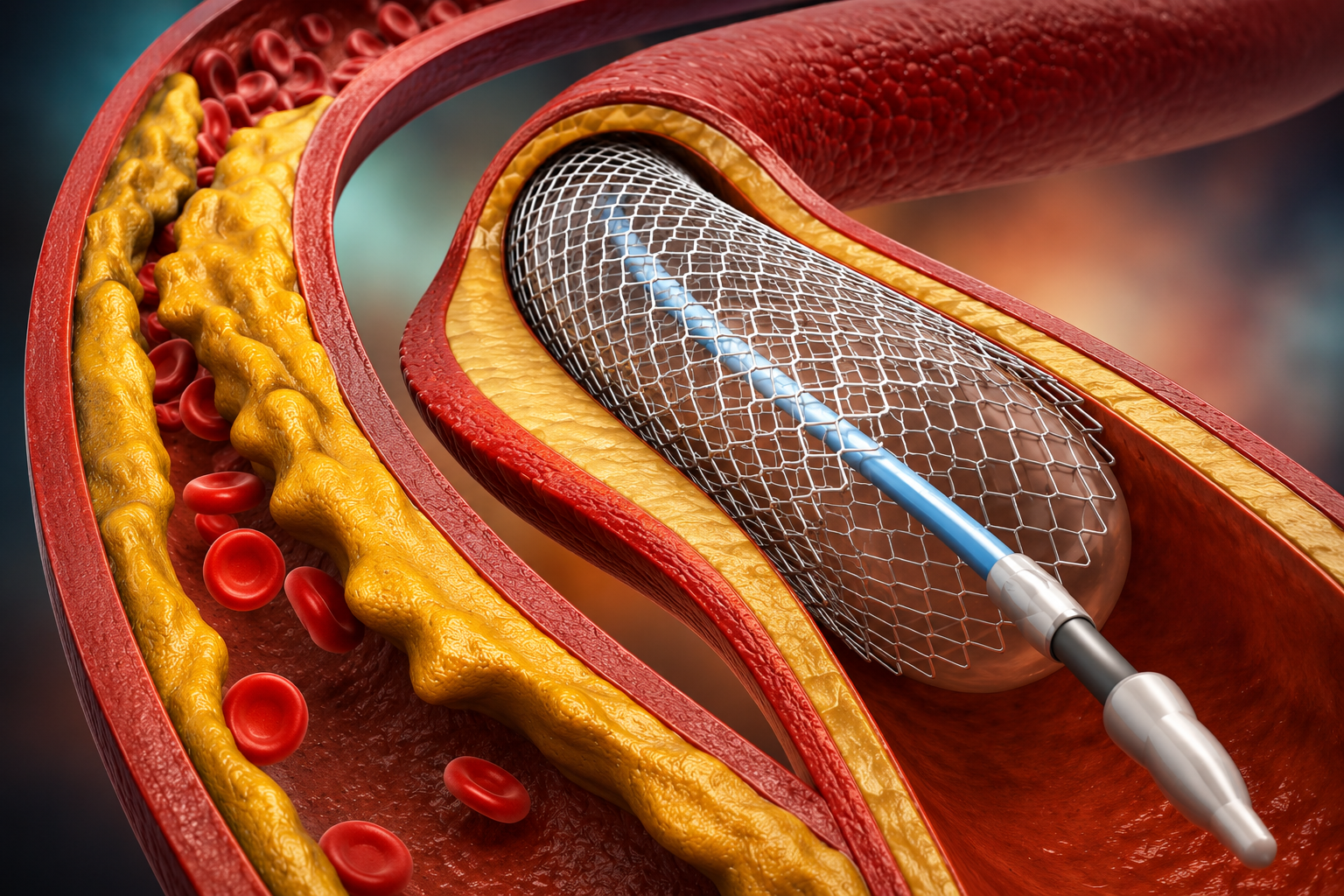
Coranary Interventions

What are Coronary Interventions?

While the basic goal remains opening a blocked artery, the “how” has become significantly more precise:

  • Fractional Flow Reserve (FFR): Before treating a blockage, doctors often use a pressure-sensing wire to measure the actual blood flow across a narrowing. This ensures that only blockages that are truly restricting oxygen to the heart are intervened upon.

  • Intravascular Imaging: Modern interventions often use IVUS (Intravascular Ultrasound) or OCT (Optical Coherence Tomography). These are tiny cameras or sensors inside the artery that provide a 360-degree view of the plaque. This allows for perfect stent sizing and placement.

Specialized Treatment Methods

Depending on the type of blockage, different tools may be used:

  • Drug-Eluting Stents (DES): These are the gold standard. The mesh is coated with medication that is released over several weeks to prevent “restenosis” (the growth of scar tissue that could re-block the artery).

  • Rotational Atherectomy: For blockages that are very hard or “calcified,” a tiny, diamond-tipped drill (rotablator) is used to gently shave away the calcium before a stent is placed.

  • Lithotripsy (Shockwave): Similar to how kidney stones are treated, sound waves can be used to crack hard calcium within the artery wall to allow the vessel to expand safely.

Understanding the Clinical Impact

The “what” of these interventions extends beyond just fixing a physical pipe. They are critical for:

  • Myocardial Salvage: In the event of an acute heart attack, “time is muscle.” Every minute saved in performing a coronary intervention preserves more of the heart’s pumping function.

  • Ischemia Management: For chronic patients, these procedures transform quality of life by allowing them to walk, climb stairs, and exercise without the crushing weight of chest pain.

Post-Intervention Care

Success depends heavily on what happens after the patient leaves the lab:

  • Dual Antiplatelet Therapy (DAPT): Patients must take blood-thinning medications for a specific period to prevent blood clots from forming on the new stent.

  • Cardiac Rehabilitation: A structured program of exercise and education to strengthen the heart and manage underlying risk factors like high blood pressure or cholesterol.

Make Appointment


Scroll to Top