
A patient may come to a cardiologist saying, “I am getting tired much faster than I used to. Even climbing a few stairs leaves me exhausted.” Often, the first thought is lack of sleep, stress, or simply getting older. Sometimes, that is exactly what it is. But when this change is new, persistent, or accompanied by other symptoms, it would not be recommended to ignore it.
What Does a Stent Actually Do?
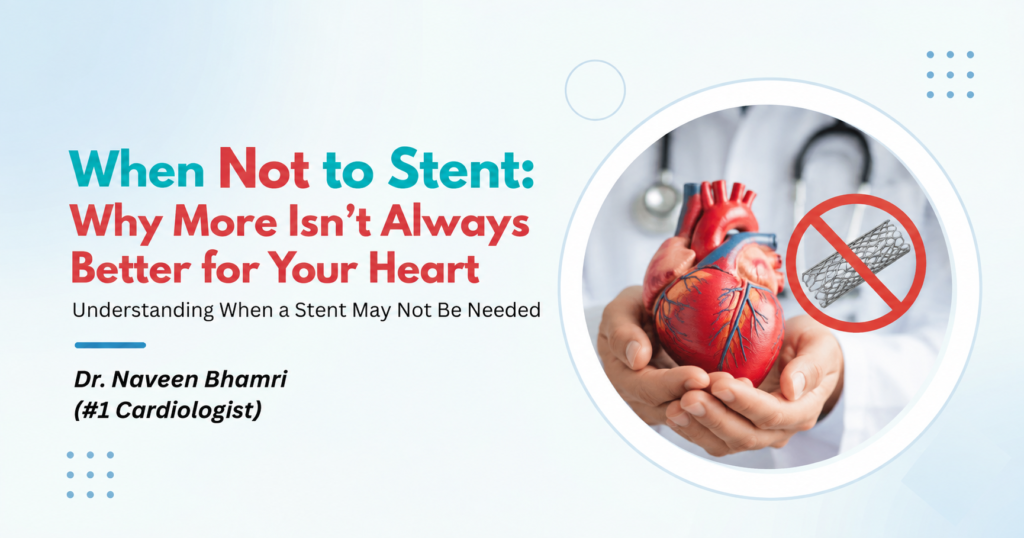
A stent is a small tube placed inside a narrowed artery to keep it open and restore normal blood flow to the heart muscle. It’s an excellent, well-proven solution — but only for the situations it’s actually meant for. Like any medical tool, it works best when used at the right time, for the right patient.
Not Every Blockage Needs a Stent
This often surprises patients, but a blockage showing up on a scan does not automatically mean a stent is required. Cardiologists look closely at how much the blockage is actually restricting blood flow before recommending any procedure. A stent is usually considered necessary when:
- The blockage is significantly restricting blood flow to the heart muscle
- You’re experiencing chest pain or breathlessness caused directly by that blockage
- Special heart-flow tests confirm the artery genuinely needs support
If these signs aren’t present, a stent may not add any real benefit — and your cardiologist may recommend a different path instead.
When Doctors Recommend Not Stenting
There are several common situations where a cardiologist may advise against a stent, even if a blockage is visible:
- Mild or moderate blockages that aren’t significantly limiting blood flow
- Blockages that aren’t causing any symptoms and are considered stable
- Cases where flow tests (like an FFR) show the artery is still supplying enough blood
- Diffuse disease spread across very small vessels, where a stent isn’t technically suitable
- Patients who are likely to do just as well with medication, lifestyle changes, and regular monitoring
In these cases, the heart is often better served by good medical management — the right medicines, blood pressure and cholesterol control, and healthier daily habits — rather than a procedure.
Medicines and Lifestyle: An Underrated First Step
For many patients, especially those with stable, mild blockages, medications that control cholesterol, blood pressure, and blood clotting — combined with regular exercise, a heart-healthy diet, and quitting smoking — can manage the condition just as effectively as a procedure, without any of the risks that come with an intervention. Your cardiologist will track your progress with periodic check-ups to make sure this approach continues to work well for you.
Why This Cautious Approach Matters
Every medical procedure carries some degree of risk, however small. Recommending a stent only when it’s truly needed isn’t about holding back care — it’s about giving you the most appropriate care. Avoiding an unnecessary procedure is just as much a part of good cardiology as performing a necessary one.
The Value of a Careful Second Opinion
If you’ve been told you need a stent and you’re unsure, it’s completely reasonable to seek a second opinion. An experienced interventional cardiologist will review your reports, may repeat certain tests if needed, and give you a clear, honest picture of whether a procedure is truly necessary — or whether your heart can be managed safely without one.
When Should You Get Evaluated?
It’s worth booking a heart check-up if you experience:
- Chest discomfort, tightness, or pain
- Breathlessness during daily activities
- Unusual fatigue
- A known blockage where you’d like a second opinion on treatment
- A family history of heart disease
With over 27 years of experience and having guided thousands of patients through this exact decision, Dr. Naveen Bhamri, Chairman & HOD Cardiology at Max Hospital, Shalimar Bagh, and Chairman & Unit Head at BLK-Max Hospital, takes the time to explain your reports clearly and recommends a stent only when it will genuinely benefit you — never as a default option.
In Short
Needing a stent is not the only outcome of a heart check-up — and not needing one is genuinely good news, not something to feel anxious about. The right treatment is the one that matches your heart’s actual condition, whether that’s a procedure or simply a well-managed, medicine-and-lifestyle approach. A calm, thorough evaluation is always the best place to start.