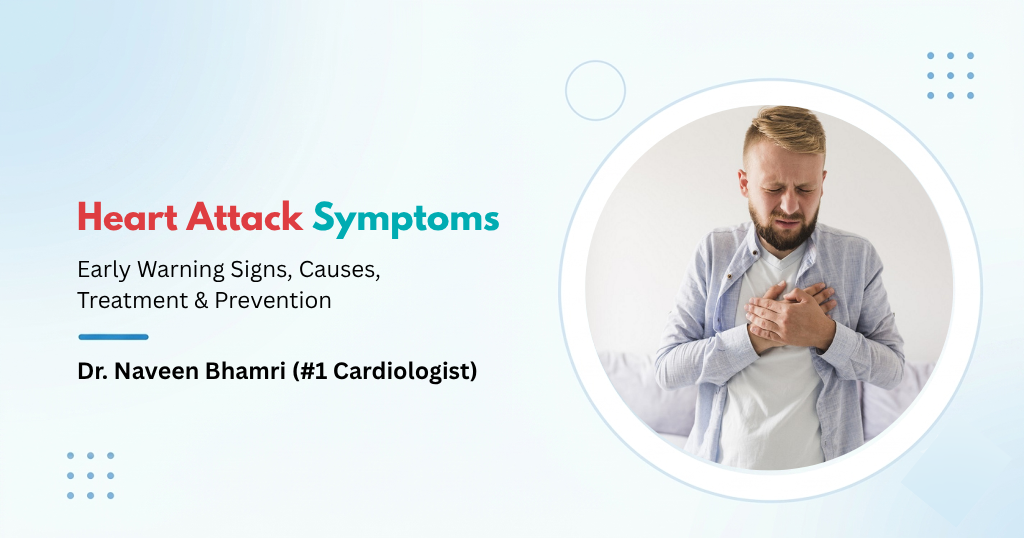

A heart attack occurs when blood flow to part of the heart muscle becomes blocked, preventing it from receiving enough oxygen. Recognizing heart attack symptoms early can help you seek emergency medical care without delay. Common symptoms include chest pressure or discomfort, shortness of breath, sweating, nausea, and discomfort that may spread to the arm, back, neck, or jaw. However, symptoms can vary from person to person, and some heart attacks may have mild or no obvious symptoms.
What Are the Early Signs of a Heart Attack?
The early signs of a heart attack can include chest discomfort, breathlessness, unusual sweating, nausea, dizziness, or unexplained weakness. These symptoms may occur suddenly or develop gradually.
Common Heart Attack Symptoms
Some of the most common heart attack warning signs include:
- Pressure, squeezing, tightness, or discomfort in the chest
- Pain or discomfort spreading to the arm, shoulder, back, neck, or jaw
- Shortness of breath
- Cold sweating
- Nausea or vomiting
- Dizziness or light-headedness
- Unusual tiredness or weakness
- A fast or irregular heartbeat
Not everyone experiences severe chest pain. New or unexplained symptoms, particularly when several occur together, should not be ignored.
What Does a Heart Attack Feel Like?
A heart attack may feel like pressure, heaviness, squeezing, or fullness in the chest rather than a sharp pain. Some people describe it as an uncomfortable sensation that does not go away with rest.
Discomfort may also be felt in the shoulders, arms, upper back, neck, or jaw. Breathlessness, sweating, nausea, or dizziness can occur alongside it.
What Are Silent Heart Attack Symptoms?
A silent heart attack occurs when a person has few, mild, or unrecognized symptoms and may not realize that a heart attack has occurred.
Silent heart attack symptoms can include unusual fatigue, mild breathlessness, indigestion-like discomfort, sweating, or mild chest discomfort. These symptoms can easily be mistaken for less serious problems.
A silent heart attack can still damage the heart muscle. People with conditions such as diabetes or those with cardiovascular risk factors should therefore take unexplained symptoms seriously and discuss concerns with a doctor.
What Causes a Heart Attack?
A heart attack usually occurs when blood flow through a coronary artery becomes blocked. In many cases, fatty deposits called plaque build up inside the artery. If a plaque ruptures, a blood clot can form around it and restrict blood flow.
When the heart muscle does not receive enough oxygen, the affected tissue can become damaged. The longer the blockage continues, the greater the potential for heart muscle injury.
What Are the Major Heart Attack Risk Factors?
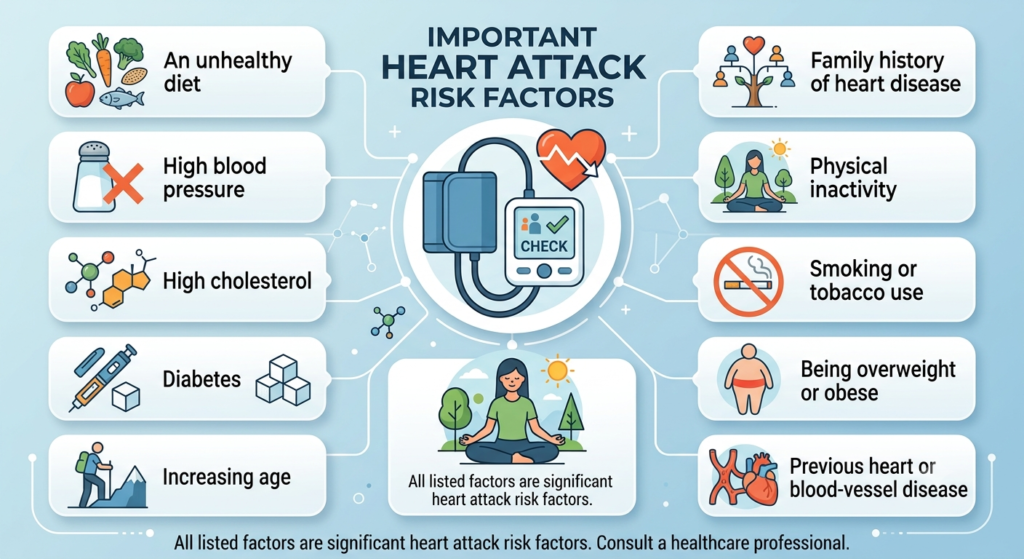
Important heart attack risk factors include:
- High blood pressure
- High cholesterol
- Diabetes
- Smoking or tobacco use
- Being overweight or obese
- Physical inactivity
- An unhealthy diet
- Increasing age
- Family history of heart disease
- Previous heart or blood-vessel disease
Having several risk factors can increase overall cardiovascular risk, making regular health checks and early risk-factor management important.
What Should You Do If You Notice Heart Attack Symptoms?
Suspected heart attack symptoms should be treated as a medical emergency. If you develop new or persistent chest pressure or discomfort, especially with breathlessness, sweating, nausea, fainting, or pain spreading to the arm, back, neck, or jaw:
- Stop physical activity and sit or rest.
- Call your local emergency medical service immediately.
- Follow the instructions provided by emergency medical professionals.
- Avoid driving yourself to the hospital if emergency medical transport is available.
- Do not delay medical care to see whether the symptoms disappear.
Do not assume that symptoms are only acidity, indigestion, or muscle pain without appropriate medical assessment.
How is a Heart Attack Diagnosed?
Doctors diagnose a heart attack using the symptoms, medical history, and appropriate tests. An ECG (electrocardiogram) is commonly performed to look for changes in the heart’s electrical activity.
Blood tests, particularly cardiac troponin testing, can help identify heart muscle injury. Depending on the patient’s condition, doctors may also recommend echocardiography, coronary angiography, or other cardiac investigations. The exact tests required depend on the symptoms and suspected type of heart problem.
What Are the Heart Attack Treatment Options?
The goal of treatment is to restore blood flow to the heart as quickly as possible and limit heart muscle damage.
Emergency Heart Attack Treatment
Depending on the type and severity of the heart attack, heart attack treatment options may include:
- Medicines that reduce clot formation and improve blood flow
- Emergency coronary angiography
- Angioplasty or percutaneous coronary intervention (PCI)
- Stent placement when appropriate
In some cases, other procedures or treatments may be required. Treatment decisions are based on the type of heart attack, location and severity of the blockage, and the patient’s overall health.
Treatment After a Heart Attack
Recovery does not end after emergency treatment. Patients may need prescribed cardiac medicines, regular follow-ups, lifestyle changes, and cardiac rehabilitation.
Managing blood pressure, cholesterol, and blood sugar is also important for reducing the risk of future cardiovascular problems.
How Can You Prevent a Heart Attack?
Not every heart attack can be prevented, but controlling cardiovascular risk factors can significantly reduce the risk. Practical steps include:
- Keep blood pressure within the recommended range.
- Check and manage cholesterol levels.
- Control blood sugar if you have diabetes.
- Stop smoking and avoid tobacco.
- Stay physically active according to your doctor’s advice.
- Follow a balanced, heart-healthy diet.
- Maintain a healthy weight.
- Attend regular health check-ups, particularly if you have multiple risk factors.
Prevention is especially important for people with a family history of heart disease or existing conditions such as diabetes, hypertension, or high cholesterol.
When Should You See a Cardiologist?
You should consider a cardiac evaluation if you experience recurrent chest discomfort, unexplained breathlessness, reduced exercise tolerance, palpitations, or other symptoms that concern you.
A cardiology consultation can also be useful if you have significant heart attack risk factors, such as high blood pressure, diabetes, high cholesterol, smoking, or a strong family history of heart disease.
For people in Delhi NCR, timely access to appropriate cardiac evaluation can help identify cardiovascular risk factors and determine whether further testing or treatment is needed.
Takeaway
Recognizing heart attack symptoms early and seeking emergency medical care can be critical. Chest pressure, breathlessness, sweating, nausea, or discomfort spreading to the arm, back, neck, or jaw should never be ignored. Along with recognizing warning signs, managing blood pressure, cholesterol, diabetes, smoking, and other cardiovascular risk factors is essential for long-term heart health.
If you are in Delhi NCR and concerned about your cardiovascular health or heart disease risk, consult a qualified cardiac specialist like Dr. Naveen Bhamri for an appropriate evaluation.
Frequently Asked Questions
What are the most common symptoms of a heart attack?
The most common symptoms include chest pressure or discomfort, shortness of breath, sweating, nausea, and discomfort that may spread to the arm, shoulder, back, neck, or jaw. Symptoms can vary, and some people may have mild or atypical symptoms.
What are the early warning signs of a heart attack?
Early warning signs of a heart attack can include new chest discomfort, breathlessness, unusual fatigue, sweating, nausea, dizziness, or discomfort in the arm, back, neck, or jaw. Because symptoms can vary, unexplained or persistent symptoms should be medically assessed.
Can a heart attack happen without chest pain?
Yes. Although chest discomfort is common, some people may experience symptoms such as breathlessness, nausea, sweating, unusual fatigue, dizziness, or pain in the back, neck, or jaw without prominent chest pain.
What are silent heart attack symptoms?
Silent heart attack symptoms may be mild or mistaken for indigestion, fatigue, or another minor problem. They can include unusual tiredness, mild breathlessness, sweating, or mild discomfort. A silent heart attack can still cause heart muscle damage.
What is the most common cause of a heart attack?
A heart attack commonly results from a blockage in a coronary artery. Plaque buildup can narrow the artery, and when plaque ruptures, a blood clot may form and restrict blood flow to the heart muscle.
What are the biggest heart attack risk factors?
Major risk factors include high blood pressure, high cholesterol, diabetes, smoking, obesity, physical inactivity, increasing age, and a family history of heart disease. Managing these factors through medical care and lifestyle changes can help reduce cardiovascular risk.