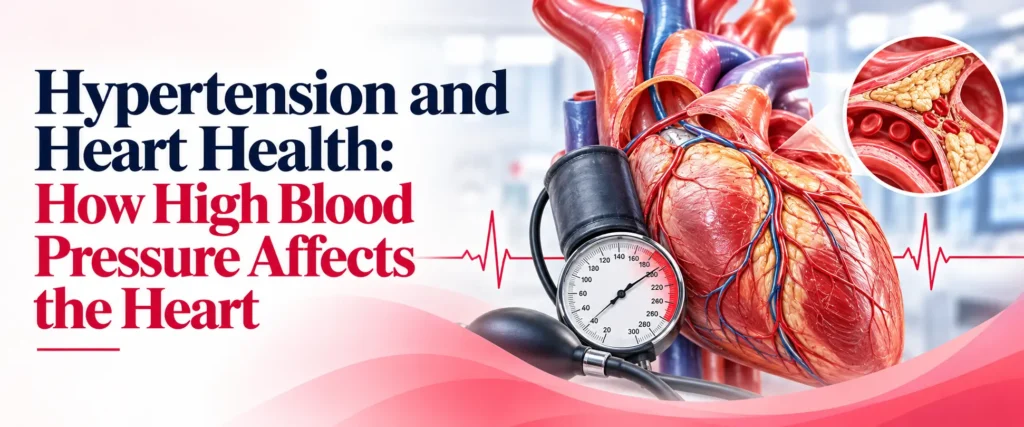
High blood pressure, or hypertension, is one of the most important risk factors for heart disease. The connection between hypertension and heart health is straightforward: when blood pressure stays elevated over time, the heart has to work harder and the blood vessels are exposed to greater pressure. This can gradually damage the heart and arteries and increase the risk of cardiovascular disease.
The concern is that hypertension often causes no obvious symptoms. Regular blood pressure checks are therefore an important part of protecting long-term heart health.
What is Hypertension?
Blood pressure is the force of blood pushing against the walls of your arteries as the heart pumps. It is recorded as two numbers: systolic pressure, the pressure when the heart contracts, and diastolic pressure, the pressure when the heart relaxes.
Hypertension refers to blood pressure that remains consistently above the recommended range. A single high reading does not necessarily mean that a person has hypertension; diagnosis usually requires appropriate repeated measurements and clinical assessment.
For many adults, a blood pressure below 120/80 mmHg is considered optimal, although the appropriate target can vary depending on age, health conditions, and cardiovascular risk.
How Does High Blood Pressure Affect the Heart?
High blood pressure affects the heart by increasing its workload and gradually contributing to structural and functional changes. If hypertension remains uncontrolled, it can increase the risk of heart failure, coronary artery disease, heart attack, and other cardiovascular complications.
1. It increases the heart’s workload.
When the pressure in the arteries is consistently high, the heart must pump harder to move blood through the body. Over time, this additional workload can put strain on the heart muscle.
2. It can thicken the heart muscle.
Long-term hypertension can cause the muscular wall of the heart, particularly the left ventricle, to become thicker. This condition is known as left ventricular hypertrophy (LVH). A thickened heart muscle may become less flexible and can interfere with the heart’s ability to fill and pump blood efficiently.
3. It can contribute to heart failure.
Persistent pressure overload can eventually affect the heart’s pumping or filling function. This is one reason hypertension is an important risk factor for heart failure.
4. It increases cardiovascular risk.
Hypertension can contribute to changes in the arteries and increase the likelihood of conditions such as coronary artery disease and heart attack, particularly when combined with other risk factors such as high cholesterol, diabetes, smoking or obesity.
What Are the Effects of High Blood Pressure on Arteries?
The effects of high blood pressure on arteries are an important part of understanding its impact on cardiovascular health.
Persistent hypertension can damage the inner lining of blood vessels and contribute to arterial stiffness and other vascular changes. Over time, these changes can make arteries less flexible and contribute to the development or progression of atherosclerosis.
When arteries supplying the heart become narrowed or damaged, blood flow to the heart muscle may be reduced. This can increase the risk of coronary artery disease and related complications.
Therefore, high blood pressure heart damage is not limited to the heart muscle itself. It can also involve the blood vessels that supply and support the heart.
What is the Link Between Hypertension and Cardiovascular Disease?
The link between hypertension and cardiovascular disease is largely driven by prolonged pressure on the heart and blood vessels. The process can be viewed simply:
Persistent high blood pressure → increased cardiac workload and vascular damage → higher cardiovascular risk
Hypertension is a major modifiable risk factor for cardiovascular disease. It is associated with an increased risk of coronary artery disease, heart attack, heart failure, and stroke.
However, cardiovascular risk is rarely determined by blood pressure alone. Cholesterol levels, diabetes, smoking, physical activity, body weight, age, family history, and other health factors also influence an individual’s overall risk.
Does High Blood Pressure Always Cause Symptoms?
No. Hypertension often does not cause noticeable symptoms. A person can have elevated blood pressure for years without feeling unwell.
This is why waiting for symptoms before checking your blood pressure is not advisable. Regular monitoring can help identify hypertension earlier, allowing lifestyle changes and treatment to be considered when necessary.
Extremely high blood pressure accompanied by symptoms such as chest pain, severe breathlessness, significant neurological symptoms, or vision changes requires urgent medical attention.
How Can You Protect Your Heart From High Blood Pressure?
Managing blood pressure is an important part of cardiovascular prevention. Depending on your individual health, this may include:
- Checking your blood pressure regularly
- Following prescribed medicines consistently
- Reducing excess sodium in the diet
- Maintaining a healthy body weight
- Staying physically active
- Avoiding smoking
- Limiting alcohol intake
- Managing cholesterol and diabetes
- Attending recommended medical or cardiovascular check-ups
Lifestyle changes can support blood pressure control, but people diagnosed with hypertension should not stop or change prescribed medication without speaking to their doctor.
When Should You See a Cardiologist for High Blood Pressure?
A cardiology consultation may be appropriate when blood pressure remains consistently high, is difficult to control, or occurs alongside other cardiovascular risk factors. You should also seek medical evaluation if hypertension is accompanied by symptoms such as chest discomfort, breathlessness, palpitations, or unexplained fatigue.
For people in Delhi NCR, a cardiologist can assess overall cardiovascular risk and determine whether additional evaluation or treatment is appropriate. Dr. Naveen Bhamri, an interventional cardiologist in Delhi, provides cardiovascular evaluation and management for patients with heart-related risk factors and conditions.
Protecting Heart Health Starts With Blood Pressure Control
The relationship between blood pressure and heart health becomes increasingly important when hypertension remains untreated for years. High blood pressure can affect both the heart muscle and the arteries, gradually increasing cardiovascular risk.
Hypertension is manageable. Regular monitoring, healthy lifestyle choices, appropriate treatment, and timely medical evaluation can help reduce its impact on the heart. If you have consistently elevated blood pressure or concerns about your cardiovascular health, consult a qualified cardiologist in Delhi NCR for an individual assessment rather than relying on symptoms alone.
FAQs About Hypertension and Heart Health
Q1. How does high blood pressure affect the heart?
High blood pressure makes the heart work harder to pump blood against increased resistance. Over time, this can contribute to thickening of the heart muscle, reduced cardiac efficiency, and a higher risk of heart failure, coronary artery disease, and heart attack.
Q2. Can hypertension cause heart failure?
Yes. Long-term uncontrolled hypertension can place continuous strain on the heart and contribute to structural and functional changes. Over time, this can increase the risk of developing heart failure.
Q3. What is the normal blood pressure range for heart health?
A reading below 120/80 mmHg is generally considered optimal for many adults. However, blood pressure targets can differ based on age, existing medical conditions, and overall cardiovascular risk. Repeated measurements and clinical assessment are more meaningful than a single reading.
Q4. Can high blood pressure damage arteries?
Yes. Persistent hypertension can contribute to damage and stiffness in the arteries and can promote vascular changes associated with atherosclerosis. This can increase the risk of coronary artery disease and other cardiovascular complications.
Q5. Does hypertension always cause symptoms?
No. Hypertension is often called a “silent” condition because many people have no noticeable symptoms. Regular blood pressure monitoring is therefore important, even when you feel healthy.
Q6. When should someone with hypertension see a cardiologist?
Consider a cardiology evaluation if your blood pressure remains elevated despite treatment, is difficult to control, or occurs with other cardiovascular risk factors or symptoms. A cardiologist can help assess your overall heart health and determine whether further evaluation is needed.