TAVI heart surgery in Delhi is an important treatment option for selected patients with severe aortic stenosis. Transcatheter Aortic Valve Implantation (TAVI), also called Transcatheter Aortic Valve Replacement (TAVR), replaces a diseased aortic valve using a catheter, usually without opening the chest. The choice between TAVI and surgical aortic valve replacement (SAVR) depends on factors such as the patient’s age, symptoms, valve anatomy, vascular access, surgical risk, life expectancy, overall health and personal preferences. A multidisciplinary Heart Team evaluates these factors to determine the most appropriate treatment approach.
What is TAVI Heart Surgery?
TAVI, also called Transcatheter Aortic Valve Replacement (TAVR), is a minimally invasive procedure used to treat severe aortic stenosis.
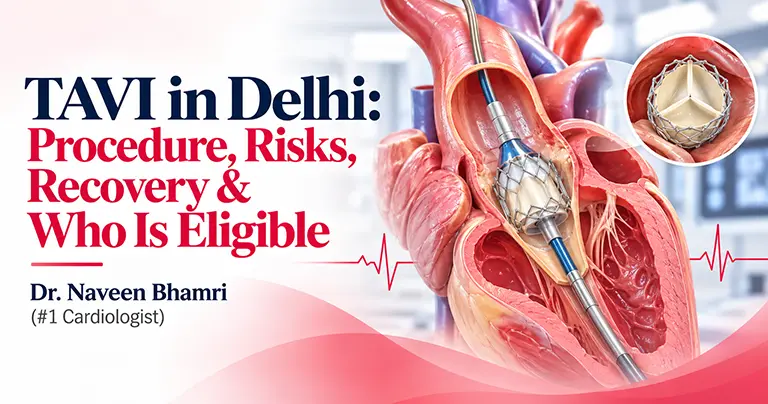
During TAVI, the cardiologist guides a catheter carrying a replacement tissue valve through a blood vessel, most commonly the femoral artery in the groin. The new valve is positioned inside the diseased aortic valve and expanded, allowing it to take over the valve’s function.
The replacement valve generally consists of biological tissue, such as bovine or porcine tissue, mounted on a supporting frame. For appropriately selected patients, TAVI for aortic stenosis can provide effective valve replacement while avoiding the chest incision and prolonged recovery associated with conventional open-heart surgery.
What Is Aortic Stenosis?
Aortic stenosis is a condition in which the aortic valve becomes narrowed or stiff, making it harder for blood to flow from the heart to the body. It commonly develops due to age-related calcium buildup, but may also result from a congenital bicuspid aortic valve or other conditions.
As the condition progresses, symptoms may include breathlessness, chest pain, dizziness, fainting and fatigue. Echocardiography is commonly used to assess its severity. In severe cases, TAVI or surgical aortic valve replacement (SAVR) may be considered based on the patient’s individual condition.
When is TAVI Recommended?
TAVI is not automatically suitable for every patient with aortic stenosis. The decision depends on the severity of valve disease, symptoms, age, anatomy, and overall health. Doctors commonly consider TAVI when a patient has severe symptomatic aortic stenosis and transcatheter valve replacement offers an appropriate treatment option.
Common symptoms that may indicate advanced aortic stenosis include:
- Breathlessness, particularly while walking or doing light physical activity
- Chest pain, tightness, or discomfort
- Dizziness or lightheadedness
- Fainting or unexplained episodes of syncope
- Persistent fatigue
- Reduced ability to walk or perform routine activities
- Swelling of the ankles or legs due to fluid retention
Patients who have developed symptoms should not simply attribute breathlessness or fatigue to aging. Severe aortic stenosis can progressively place strain on the heart and requires timely assessment.
Patients who may particularly benefit from TAVI
TAVI may be considered for selected patients with severe aortic stenosis based on age, symptoms, valve anatomy, vascular access, surgical risk, life expectancy, comorbidities and patient preferences. The choice between TAVI and surgical aortic valve replacement (SAVR) should be made by a multidisciplinary Heart Team after detailed evaluation. Factors that may influence the recommendation include:
- Advanced age or frailty: Older patients may have a higher risk of complications from open-heart surgery.
- Previous heart surgery: A repeat open-heart procedure may carry additional complexity.
- Kidney disease: Chronic kidney problems require careful assessment and planning before valve intervention.
- Severe lung disease: Significant respiratory conditions can increase the risks associated with major surgery.
- Diabetes and other medical conditions: Multiple comorbidities can affect surgical risk and recovery.
However, age alone does not determine whether TAVI is appropriate. The heart team must assess the individual patient’s anatomy, life expectancy, valve durability considerations, and surgical risk before recommending treatment.
TAVI vs Surgical Aortic Valve Replacement (SAVR)
| Factor | TAVI | SAVR |
| Approach | Catheter-based valve replacement | Open surgical valve replacement |
| Chest incision | Usually does not require opening the chest | Requires surgical access to the heart |
| Common access | Usually through the femoral artery when suitable | Surgical access through the chest |
| Recovery | Generally faster recovery and shorter hospital stay | Usually longer recovery and hospital stay |
| Bleeding risk | Generally lower than SAVR in appropriate patients | Generally higher than TAVI |
| Pacemaker risk | Can be higher with some TAVI valves and patient anatomies | Risk varies and may be lower in some settings |
| Valve anatomy | Requires suitable valve and vascular anatomy | Can be preferred for certain anatomical conditions |
| Younger patients | Long-term valve durability and future procedures need consideration | May be preferred in younger patients or when long-term lifetime management favours surgery |
| Decision-making | Depends on age, anatomy, surgical risk, life expectancy and preferences | Depends on the same patient-specific factors |
Neither TAVI nor SAVR is universally better for every patient. The Heart Team considers the patient’s age, symptoms, valve anatomy, vascular access, surgical risk, life expectancy, associated heart conditions and preferences before recommending the most appropriate valve replacement strategy.
What Are the Benefits of TAVI?
For appropriately selected patients, TAVI can offer several potential benefits compared with conventional surgical valve replacement:
- Minimally invasive approach: TAVI is usually performed through a catheter rather than an open-chest surgical approach.
- Shorter hospital stay: Many patients can leave the hospital sooner when recovery is uncomplicated.
- Faster recovery: Patients may return to routine activities sooner than after conventional open-heart valve surgery.
- Less surgical trauma: TAVI generally involves less surgical trauma and may reduce the need for a large chest incision.
- Useful for patients at higher surgical risk: TAVI can be an important treatment option for patients whose age, frailty, medical conditions or previous surgery increases the risk of conventional surgery.
However, the benefits of TAVI must be weighed against potential risks and long-term considerations. The Heart Team determines whether TAVI or SAVR is more appropriate for each patient.
What Tests Are Done Before TAVI?
Before TAVI, the Heart Team performs a detailed assessment to confirm the severity of aortic stenosis and determine whether the patient’s anatomy is suitable for the procedure. Tests may include:
- Echocardiography: Assesses the aortic valve and heart function.
- CT scan: Evaluates the aortic valve, aorta and blood vessels and helps determine valve size and access route.
- ECG: Checks heart rhythm and electrical activity.
- Blood tests: Assess kidney function and other factors relevant to the procedure.
- Coronary and vascular assessment: May be performed when required.
These results, along with the patient’s symptoms, medical history, age and overall health, help the Heart Team determine the most appropriate treatment approach.
How Is the TAVI Procedure Performed?
The TAVI procedure in Delhi is performed in a specialized cardiac catheterization laboratory or hybrid operating room by a multidisciplinary heart team. The exact technique depends on the patient’s anatomy, age, medical history, and overall surgical risk. The commonly used transfemoral approach generally involves the following steps:
Pre-procedure assessment
Before TAVI, the cardiac team evaluates the severity of aortic stenosis and determines whether the patient is suitable for transcatheter valve replacement. Doctors may use:
- Echocardiography to assess valve function and heart performance
- CT scans to evaluate the aortic valve, aorta, and blood vessels
- ECG to assess heart rhythm
- Blood tests to evaluate kidney function and other parameters
- Coronary and vascular assessment when required
The heart team also considers age, frailty, previous cardiac surgery, and other medical conditions before recommending TAVI.
Catheter insertion
The doctor usually accesses the femoral artery through a small puncture in the groin. Other access routes may be considered when the femoral arteries are unsuitable.
Valve positioning
The replacement valve is carefully guided through the artery towards the heart. Imaging techniques, including fluoroscopy and echocardiography when required, help the cardiologist position the valve accurately.
Valve deployment
Once the replacement valve reaches the diseased aortic valve, the doctor expands it into position. The new valve pushes the damaged valve leaflets aside and begins regulating blood flow.
Final assessment
The team checks the valve’s position, blood flow, and surrounding structures before removing the catheter and closing the access site. Unlike traditional open-heart valve replacement, TAVI generally does not require opening the chest or using a heart-lung bypass machine.
What Are the Common Risks of TAVI?
TAVI is minimally invasive, but it remains a major cardiac procedure and carries potential complications.
- Heart rhythm problems: The new valve can sometimes affect the heart’s electrical conduction system. Some patients may develop heart rhythm disturbances and require a permanent pacemaker.
- Bleeding or blood vessel injury: Because the procedure usually involves arterial access through the groin, bleeding, bruising, or injury to the blood vessel can occur.
- Paravalvular leak: A small amount of blood may leak around the replacement valve if it does not completely seal against the native valve. Modern valve designs and advanced imaging help doctors minimize this risk.
- Stroke: Small fragments of calcified material can occasionally become dislodged during valve deployment and travel to the brain, resulting in a stroke.
- Kidney stress: The contrast dye used during fluoroscopic imaging can temporarily affect kidney function, particularly in patients who already have kidney disease. Doctors therefore assess renal function and take precautions in higher-risk patients.
The overall risk varies considerably from patient to patient. A detailed evaluation before TAVI helps the heart team identify and reduce individual risks.
TAVI Recovery Time: How Long Does It Take?
One of the major advantages of TAVI is the relatively quick recovery compared with conventional open-heart valve surgery. Recovery varies depending on age, overall health, access-site healing, kidney function, heart rhythm, complications and other medical conditions. A typical recovery pathway may look like this:
| Recovery Phase | Possible Recovery Timeline | What to Expect |
| Hospital stay | 2–4 days | Monitoring, medication adjustment, and early mobilization |
| Initial recovery at home | 1–2 weeks | Groin-site care and short, frequent walks |
| Return to routine activities | 2–4 weeks | Gradual return to normal daily activities |
| Long-term follow-up | Ongoing | Cardiac reviews, echocardiograms, and prescribed medication |
TAVI may allow earlier discharge and a faster return to routine activities compared with traditional open-heart valve replacement.
Hospital stay varies between patients and depends on factors such as the access route, heart rhythm, kidney function, other medical conditions and whether any complications occur. Patients with an uncomplicated recovery may be discharged earlier than those undergoing conventional surgical valve replacement.
Recovery Tips After TAVI
Following the cardiologist’s instructions is essential for a safe recovery.
- Keep the access site clean: Monitor the groin area for increasing swelling, bleeding, redness, or unusual pain. Contact your medical team if you notice any changes.
- Start walking gradually: Light walking encourages mobility and helps rebuild stamina. Avoid suddenly returning to strenuous exercise or heavy lifting.
- Take prescribed medicines regularly: Your cardiologist may prescribe antiplatelet or blood-thinning medication depending on your individual condition and other cardiovascular risks. Never stop these medicines without medical advice.
- Attend follow-up appointments: Regular clinical reviews and echocardiograms help doctors assess the functioning of the replacement valve and monitor heart health.
- Control cardiovascular risk factors: Maintain a heart-healthy diet, manage blood pressure and diabetes, avoid tobacco, and follow the activity plan recommended by your cardiac team.
Some patients may experience fatigue during the early recovery period, but recovery varies between individuals. Persistent or worsening fatigue, breathlessness, chest pain, fainting, unusual weakness or other concerning symptoms should be discussed promptly with the treating medical team rather than being assumed to be a normal part of recovery.
When to Seek Medical Attention After TAVI
Contact your medical team promptly if you experience:
- increasing bleeding from the catheter-access site
- significant swelling or severe pain at the access site
- new or worsening breathlessness
- chest pain
- fainting
- sudden weakness or difficulty speaking
- palpitations or a very slow/irregular heartbeat
- fever or signs of infection
Choosing an Experienced TAVI Heart Specialist in Delhi
Some patients may experience fatigue during the early recovery period, but recovery varies between individuals. Persistent or worsening fatigue, breathlessness, chest pain, fainting, unusual weakness or other concerning symptoms should be discussed promptly with the treating medical team rather than being assumed to be a normal part of recovery.
Dr. Naveen Bhamri, Chairman & HOD, Cardiology at Max Hospital Shalimar Bagh and Chairman & Unit Head at BLK Max Hospital, brings more than 27 years of cardiology experience and has performed over 50,000 cardiac procedures. His reported procedural experience includes:
- 100+ TAVI procedures
- 20,000+ angioplasties
- 50,000+ angiographies
- 1,500+ device implants
- 150+ peripheral angioplasties
- 500+ drug-coated balloon procedures
- 300,000+ patients served
His experience in interventional cardiology allows patients with complex cardiovascular conditions to undergo comprehensive assessment before deciding whether TAVI, conventional valve surgery, or another treatment approach is more appropriate.
Frequently Asked Questions
Q1. Is TAVI better than open-heart surgery?
TAVI is not universally better than surgical aortic valve replacement (SAVR). For appropriately selected patients, TAVI can offer a less invasive treatment with potentially faster recovery, while SAVR may be preferred in certain younger patients, anatomical situations or when other cardiac conditions require surgery. The Heart Team compares both options based on factors such as age, symptoms, valve anatomy, vascular access, surgical risk, life expectancy, associated conditions and patient preferences.
Q2. How long does TAVI surgery take?
The TAVI procedure itself is generally completed within a few hours, although the exact duration varies depending on the patient’s anatomy, valve type, access route and procedural complexity. Preparation, monitoring and recovery take additional time.
Q3. How many days do I need to stay in the hospital after TAVI?
Many uncomplicated patients stay around 2–4 days, although some may require longer monitoring depending on their recovery and any complications.
Q4. Can I walk after TAVI?
Yes. If the patient’s condition is stable, the medical team generally encourages early mobilization, with walking often beginning within about 24 hours. The intensity should increase gradually.
Q5. How soon can I return to normal life after TAVI?
Many patients can resume routine daily activities within approximately 2–4 weeks, depending on their overall health and recovery. Heavy lifting and strenuous exercise should be avoided until the cardiologist provides clearance.
Q6. Is TAVI painful?
Because TAVI is minimally invasive and generally performed through a small vascular access point, patients typically experience less surgical trauma than with open-heart surgery. Anaesthesia and pain-management strategies are used to keep the patient comfortable.
Q7. Who should I consult for TAVI in Delhi?
Patients should consult an experienced interventional cardiologist or a multidisciplinary heart team with expertise in structural heart disease and TAVI. The specialist can determine whether TAVI is appropriate after reviewing echocardiography, CT imaging, medical history, and surgical risk.
Q8. Is TAVI suitable for every patient with aortic stenosis?
No. TAVI suitability depends on several factors, including the severity of aortic stenosis, symptoms, valve anatomy, vascular access, age, overall health, and surgical risk. A personalised evaluation is essential before choosing the procedure.
Q9. What is the success rate of TAVI?
TAVI has become an established treatment for appropriately selected patients with severe aortic stenosis, with high procedural success rates in experienced centres. However, there is no single success rate that applies to every patient. Outcomes depend on factors such as age, valve anatomy, overall health, surgical risk, vascular access and the presence of other heart or medical conditions. A personalised assessment is necessary to understand the expected benefits and risks for an individual patient.
Q10. What is the cost of TAVI in Delhi?
The cost of TAVI in Delhi varies depending on the type of replacement valve, hospital, diagnostic tests, medical complexity, length of hospital stay and other treatment requirements. Because these factors differ from patient to patient, an exact cost can generally be provided after a cardiology evaluation and treatment planning.
Q11. How long does a TAVI valve last?
The durability of a TAVI valve depends on factors such as the valve type, patient’s age, anatomy and other clinical factors. Long-term durability is an important consideration when choosing between TAVI and surgical valve replacement, particularly for younger patients who may require valve treatment over a longer lifetime. Your Heart Team can discuss the expected durability of the selected valve and future treatment options as part of the decision-making process.
Q12. Is TAVI possible without open-heart surgery?
Yes. TAVI is designed to replace the aortic valve without the conventional open-chest approach used in surgical aortic valve replacement. In many patients, the replacement valve is delivered through a catheter inserted into the femoral artery in the groin. However, the access route and procedural approach depend on the patient’s blood vessels, valve anatomy and overall clinical condition.
Q13. Which is better, TAVI or TAVR?
TAVI and TAVR generally refer to the same type of transcatheter aortic valve replacement procedure. TAVI stands for Transcatheter Aortic Valve Implantation, while TAVR stands for Transcatheter Aortic Valve Replacement. The terminology may vary by country or medical centre. The important question is whether transcatheter valve replacement or surgical aortic valve replacement is more appropriate for the individual patient.