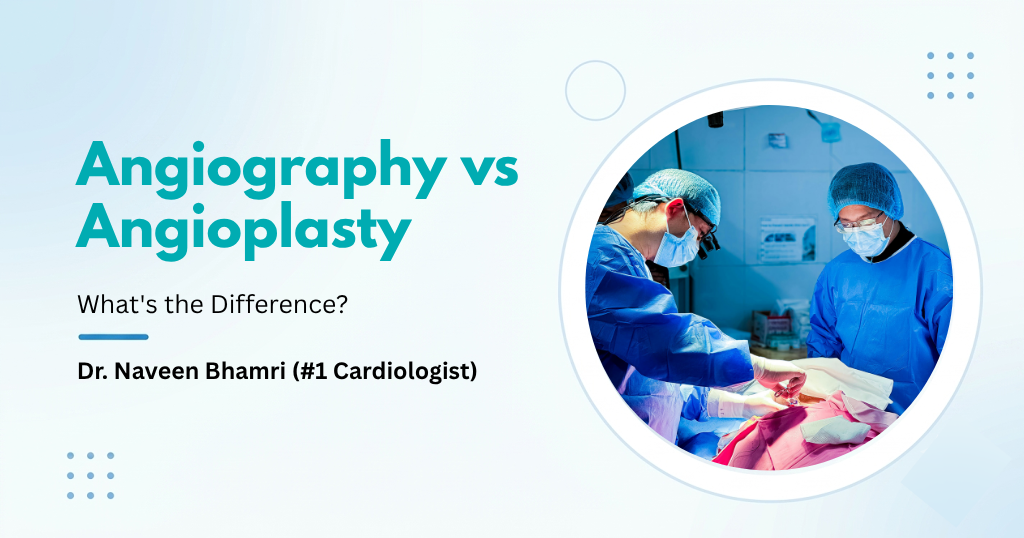

Angiography vs Angioplasty: What’s the Difference? is a common question among patients diagnosed with heart blockages. Although both procedures involve cardiac catheterisation, they serve different purposes. Angiography helps doctors identify and locate blockages inside blood vessels, while angioplasty treats those blockages by opening narrowed arteries. Understanding the difference helps patients make informed decisions about their heart treatment.
What is Angiography?
Angiography is a diagnostic procedure used to examine the condition of blood vessels, especially the coronary arteries that supply blood to the heart muscle. During coronary angiography, a cardiologist inserts a thin catheter through an artery, usually from the wrist or groin. The doctor then injects a contrast dye and uses X-ray imaging to create detailed pictures of the arteries.
This procedure helps identify:
- Location of blockages
- Severity of narrowing
- Number of affected arteries
- Overall condition of coronary vessels
Doctors consider coronary angiography the gold standard for diagnosing coronary artery disease (CAD) because it can detect even small artery narrowing.
Why Do Doctors Recommend Angiography?
A cardiologist may suggest angiography when a patient experiences:
- Chest pain or discomfort
- Abnormal stress test results
- Shortness of breath
- Suspected coronary artery disease
- Previous heart attack symptoms
Angiography does not remove blockages. It only helps doctors understand the condition of the arteries and decide the next treatment approach.
What is Angioplasty?
Angioplasty is a treatment procedure that opens blocked or narrowed arteries and restores blood flow to the heart. Doctors usually perform angioplasty after angiography confirms a significant blockage that requires treatment.
During angioplasty:
- A catheter reaches the blocked artery.
- A small balloon at the catheter tip inflates at the blockage site.
- The balloon pushes plaque against the artery wall.
- A stent is placed to keep the artery open.
Most modern procedures use drug-eluting stents, which release medication to reduce the chances of the artery narrowing again.
Angiography vs Angioplasty: Key Differences
| Feature | Angiography | Angioplasty |
| Purpose | Detects and evaluates blockages | Treats and opens blocked arteries |
| Type of Procedure | Diagnostic test | Treatment procedure |
| Main Technique | Contrast dye with X-ray imaging | Balloon inflation and stent placement |
| Duration | Around 30–60 minutes | Around 45 minutes to 2 hours |
| Hospital Stay | Usually same-day discharge | May require 1–2 days observation |
| Result | Shows the condition of arteries | Improves blood flow by opening arteries |
Can Angiography and Angioplasty Be Done Together?
Yes. In many cases, doctors perform angiography first and decide the next step based on the findings. If angiography shows a severe blockage, the cardiologist may perform angioplasty during the same sitting. For example:
- Angiography identifies a 90% blockage in a coronary artery.
- The cardiologist evaluates the blockage.
- Angioplasty opens the artery and places a stent.
This combined approach allows faster diagnosis and treatment when medically appropriate.
Success Rate and Safety of Angiography and Angioplasty
Both procedures are widely performed and have strong safety records when conducted by experienced cardiologists.
Angiography Accuracy
Coronary angiography remains one of the most accurate methods to diagnose coronary artery disease. It can identify blockages and help doctors plan appropriate treatment.
Angioplasty Success Rate
Percutaneous coronary intervention (PCI), commonly known as angioplasty, achieves initial success in more than 95% of suitable cases according to cardiology guidelines.
Risk of Stent Re-Narrowing
Earlier-generation stents had higher chances of restenosis (re-narrowing of arteries). Modern drug-eluting stents have significantly reduced this risk, with restenosis rates generally below 5–10%.
Recovery After Angiography and Angioplasty
Recovery time depends on the procedure performed and the patient’s overall health.
After Angiography
Most patients:
- Resume light activities within 24–48 hours
- Drink fluids to help clear the contrast dye
- Avoid strenuous activity for a short period
After Angioplasty
Patient needs:
- 1–2 days of observation depending on their condition
- Avoid heavy lifting for around 1–2 weeks
- Follow prescribed blood-thinning medications
- Participate in cardiac rehabilitation if recommended
Following lifestyle changes after angioplasty helps maintain long-term heart health.
Which Procedure Do You Need: Angiography or Angioplasty?
The choice depends on your heart condition.
A cardiologist recommends angiography when they need detailed information about your arteries. If the test reveals a significant blockage affecting blood flow, angioplasty may become the preferred treatment option.
Factors considered include:
- Severity and location of blockage
- Number of blocked arteries
- Symptoms
- Heart function
- Overall medical history
Your doctor will decide the safest and most effective treatment plan based on your individual condition.
Why Choose an Experienced Heart Specialist?
Cardiac procedures require precision, advanced technology, and extensive experience. Dr. Naveen Bhamri, Vice Chairman & HOD of Interventional Cardiology at Max Super Speciality Hospital, is a top heart specialist in Delhi with over 27 years of experience in advanced cardiac care. With expertise in complex heart procedures, he has performed:
- 50,000+ Angiographies
- 20,000+ Angioplasties
- 150+ Peripheral Angioplasties
- 500+ Drug-Coated Balloon procedures
- 60+ TAVI procedures
- 1,500+ Device Implants
His experience helps patients receive accurate diagnoses and personalised treatment plans for coronary artery disease and other heart conditions.
Frequently Asked Questions (FAQs)
Is angiography more serious than angioplasty?
Angiography is mainly a diagnostic procedure, while angioplasty involves treating a blockage. Both are minimally invasive procedures, but angioplasty is a more advanced intervention because it includes balloon and stent placement.
Can angiography remove heart blockage?
No. Angiography only identifies blockages. Angioplasty is the procedure used to open narrowed arteries.
How long does an angioplasty stent last?
Modern drug-eluting stents are designed to provide long-term support. Maintaining healthy lifestyle habits and taking prescribed medicines helps improve outcomes.
Is angioplasty always required after angiography?
No. Doctors recommend angioplasty only when a blockage requires intervention. Some blockages can be managed with medication and lifestyle changes.
Final Thoughts
Understanding angiography vs angioplasty helps patients know what to expect during heart treatment. Angiography identifies the problem, while angioplasty treats the blockage and restores blood flow.
If you experience symptoms of heart disease or have been advised to undergo cardiac evaluation, consulting an experienced heart specialist in Delhi can help you receive the right diagnosis and treatment at the right time.