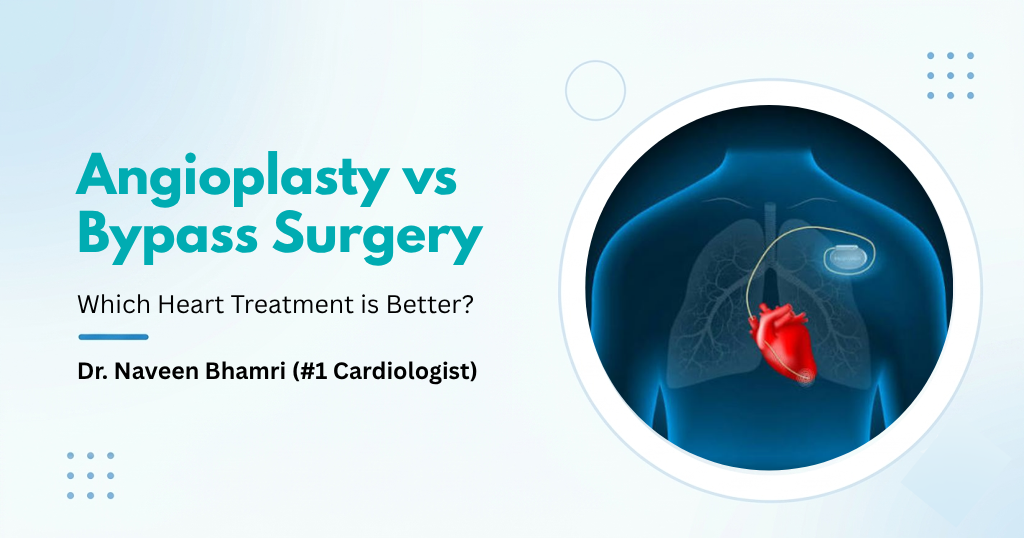

Heart blockages require timely diagnosis and the right treatment approach. When patients compare angioplasty vs bypass surgery, they often wonder which procedure offers better results. Both treatments restore blood flow to the heart, but doctors choose between them based on the number of blockages, their location, severity, and the patient’s overall health condition.
Difference Between Angioplasty and Bypass Surgery
Angioplasty and bypass surgery treat blocked heart arteries, but they follow different approaches.
- Angioplasty (PCI) uses a small balloon and stent to open a narrowed artery and improve blood circulation. Doctors perform the procedure through a catheter inserted through the wrist or groin.
- Bypass surgery (CABG) creates a new route for blood flow by using a healthy blood vessel from another part of the body. Surgeons connect this vessel beyond the blocked artery to bypass the blockage.
Neither procedure works as a universal solution for every patient. A cardiologist recommends treatment after evaluating the severity of blockages, heart function, age, medical history, and risk factors.
Angioplasty vs Bypass Surgery: Quick Comparison
| Feature | Angioplasty (PCI with Stents) | Bypass Surgery (CABG) |
| Treatment Method | A balloon expands the blocked artery and a stent keeps it open | A healthy blood vessel creates a new pathway around the blockage |
| Procedure Type | Minimally invasive catheter-based procedure | Major open-heart surgery |
| Anaesthesia | Local anaesthesia with light sedation | General anaesthesia |
| Hospital Stay | Usually 1–2 days | Usually 5–7 days, including ICU monitoring |
| Recovery Time | Light activities within 3–7 days | Full recovery may take 6–12 weeks |
When Is Angioplasty the Better Treatment Option?
Doctors recommend angioplasty when they need to quickly restore blood flow or treat specific types of artery blockages without major surgery. This minimally invasive procedure uses a balloon and stent to open narrowed arteries. The decision depends on factors like blockage location, severity, and the patient’s overall health condition. Angioplasty can provide effective results with shorter hospital stays and faster recovery compared to bypass surgery.
1. During an Emergency Heart Attack
During an acute heart attack, a blocked artery prevents oxygen from reaching the heart muscle. Angioplasty offers one of the fastest ways to reopen the artery and restore blood circulation. By placing a stent in the blocked area, doctors can reduce heart muscle damage and improve survival chances. Emergency angioplasty is especially effective when performed quickly after heart attack symptoms begin.
2. Single or Double Vessel Blockages
Patients with one or two blocked coronary arteries often receive angioplasty when the blockages are located in accessible areas. The procedure allows doctors to restore blood flow without performing open-heart surgery. A stent keeps the artery open and helps maintain proper circulation. For suitable patients, angioplasty provides effective treatment with minimal discomfort and allows a quicker return to regular activities.
3. Patients With High Surgical Risk
Some patients may have health conditions that make major surgery more challenging. Advanced age, severe lung problems, kidney complications, or overall weakness can increase bypass surgery risks. In such cases, doctors may consider angioplasty as a safer alternative. Since the procedure requires only a catheter-based approach, it generally causes less physical stress and allows patients to recover faster.
4. Faster Recovery Requirements
Angioplasty can be a suitable option for patients who need a shorter recovery period due to work, lifestyle, or personal requirements. Since it does not involve open-heart surgery, most patients can return to light activities within a few days. However, doctors recommend angioplasty only when it matches the patient’s heart condition and provides long-term benefits.
When Is Bypass Surgery (CABG) the Better Option?
Bypass surgery becomes the preferred choice when patients have complex coronary artery disease, multiple blockages, or severe narrowing in important heart arteries. The procedure creates a new pathway for blood flow around blocked arteries. Although CABG requires longer recovery, it can provide better long-term results for selected patients, especially those with advanced heart disease.
1. Multiple Vessel Blockages
Doctors often recommend bypass surgery for patients with triple vessel disease, where multiple major coronary arteries have severe blockages. Treating several complex blockages through stents may not always provide the best long-term outcome. CABG creates alternative blood flow routes around these blocked arteries, helping improve heart function and reducing the possibility of repeated procedures.
2. Left Main Artery Blockage
The left main coronary artery supplies blood to a large portion of the heart muscle. A blockage in this artery can become extremely serious because it affects major areas of the heart. Doctors often consider bypass surgery for suitable patients with left main artery disease because it can provide a more reliable blood supply and better long-term protection.
3. Patients With Diabetes and Multiple Blockages
Patients with diabetes and multiple coronary artery blockages often require careful treatment planning. Diabetes can increase the risk of future artery problems and repeat procedures after stenting. Research shows that selected diabetic patients with complex blockages may achieve better long-term outcomes with bypass surgery. Doctors evaluate each case individually before recommending CABG as the preferred option.
4. Weak Heart Muscle Function
Patients with reduced heart-pumping ability may benefit from bypass surgery because it improves blood supply to areas affected by blocked arteries. By creating new routes for circulation, CABG can support better oxygen delivery to the heart muscle. Doctors consider heart function tests, blockage severity, and overall health before deciding whether bypass surgery offers the best possible outcome.
Which Is Safer: Angioplasty or Bypass Surgery?
Both procedures have improved significantly due to advancements in medical technology and surgical techniques. Angioplasty usually involves:
- Smaller incision
- Shorter hospital stay
- Faster recovery
However, some complex blockages may return after stenting and require additional procedures. Bypass surgery involves:
- Longer recovery period
- More invasive approach
But it may provide better long-term results for patients with severe coronary artery disease. The safer option depends on your individual heart condition rather than the procedure itself.
How Doctors Decide Between Angioplasty and Bypass Surgery
Cardiologists consider several factors before recommending treatment:
- Number of Blockages: A single blockage may respond well to angioplasty, while multiple complex blockages may require bypass surgery.
- Location of Blockages: Blockages in important arteries, such as the left main artery, require careful evaluation.
- Age and Overall Health: Doctors consider kidney function, diabetes, lung health, and other medical conditions.
- Heart Pumping Capacity: An echocardiogram helps doctors understand how well the heart is functioning.
Why a Team-Based Approach Matters
Choosing between angioplasty and bypass surgery requires expert evaluation, drawing on both:
- Interventional cardiologists who perform angioplasty
- Cardiac surgeons who perform bypass procedures
This combined evaluation helps doctors recommend the most suitable treatment based on angiography reports and individual patient needs.
When patients need guidance for complex heart blockage treatments, consulting an experienced specialist becomes important.
Dr. Naveen Bhamri, Vice Chairman & HOD of Interventional Cardiology, Max Super Speciality Hospital, Shalimar Bagh, brings extensive experience in both diagnostic and interventional cardiology, including:
- 50,000+ angiography procedures
- 20,000+ angioplasties
- 1,500+ device implants
As an experienced heart specialist in Delhi, Dr. Naveen Bhamri evaluates each patient’s condition carefully before suggesting angioplasty, bypass surgery, or other advanced cardiac treatments.
Important Things Patients Should Know in India
If you have a heart blockage and are choosing between angioplasty and bypass surgery, keep these points in mind:
Stent Quality and Regulation
Drug-Eluting Stents (DES) used during angioplasty are regulated by Indian healthcare authorities to ensure quality, safety, and consistent manufacturing standards.
Insurance Coverage
Both angioplasty and bypass surgery are covered under many health insurance policies and government healthcare schemes, depending on eligibility and policy terms.
Do Not Delay Treatment
Ignoring symptoms like chest pain, breathlessness, fatigue, or discomfort can increase heart risks. Early diagnosis helps doctors choose the right treatment before complications occur.
Final Thoughts
The choice between angioplasty vs bypass surgery depends on your unique heart condition. Angioplasty offers a minimally invasive solution with faster recovery, while bypass surgery can provide stronger long-term results for complex blockages.
A detailed evaluation from an experienced cardiologist helps patients make an informed decision. If you are looking for guidance from a trusted heart specialist in Delhi, consulting an experienced cardiac expert can help determine the safest treatment option for your heart health.