
Causes and Risk Factors
Patient: Mr X
Clinical Presentation: Chest pain and breathlessness
Diagnosis: Acute Coronary Syndrome (ACS) with significant left main coronary artery disease and double-vessel coronary artery disease
Additional Clinical Consideration: Thrombocytopenia
Clinical Overview
The patient presented with chest pain and breathlessness and was evaluated for Acute Coronary Syndrome (ACS). Coronary angiography revealed significant left main coronary artery disease involving the LAD/LCX bifurcation, along with double-vessel coronary artery disease.
The presence of thrombocytopenia added complexity to the treatment decision, particularly when considering the relative risks and benefits of PCI versus CABG, as well as the need for antiplatelet therapy.
Intervention
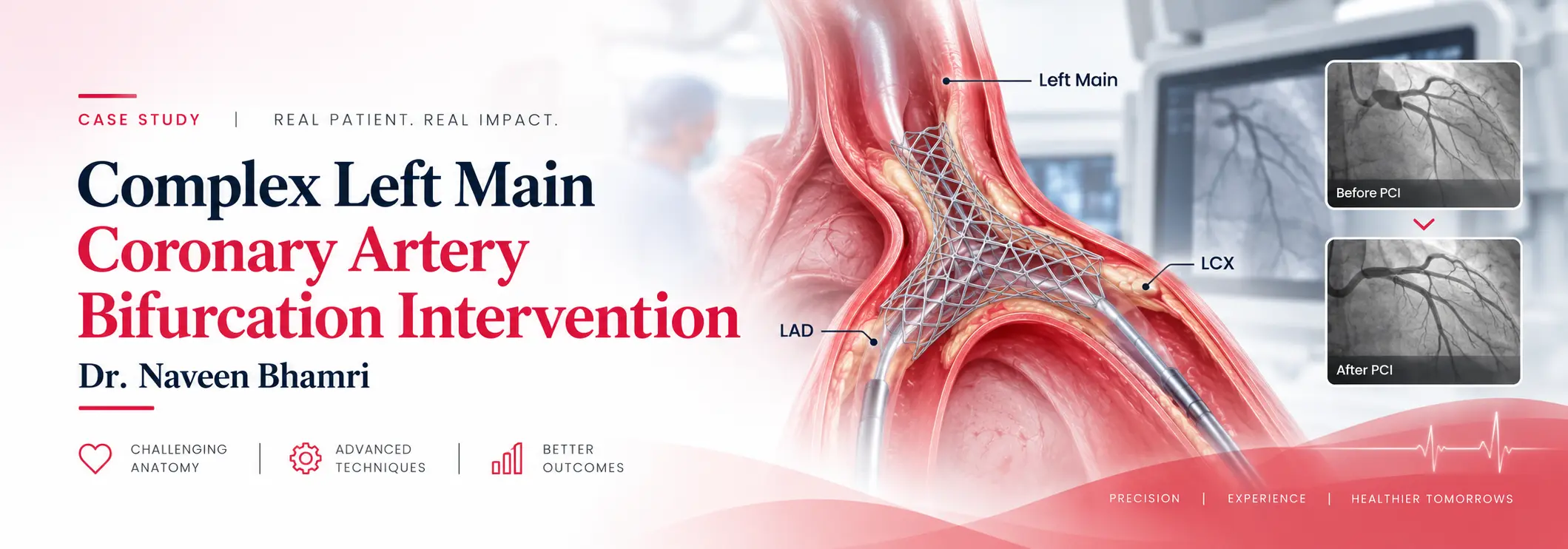
Following a comprehensive clinical assessment, the patient underwent percutaneous coronary intervention (PCI) of the left main–LAD/LCX bifurcation with stent implantation using a dedicated bifurcation PCI strategy.
The primary objectives were to achieve optimal revascularization of the left main coronary artery and preserve adequate blood flow to both major branches:
- Left anterior descending artery (LAD)
- Left circumflex artery (LCX)
Procedural Challenges
This was a technically demanding intervention involving several important challenges:
Post-Procedure Assessment
Following the intervention:
- Left Ventricular Ejection Fraction (LVEF): 54%
- Left Ventricular Diastolic Function: No evidence of diastolic dysfunction
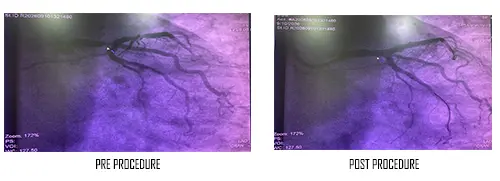
- Final Coronary Angiography: Demonstrated satisfactory treatment of the left main bifurcation with preserved flow in the LAD and LCX
Clinical Significance
Left main bifurcation disease is one of the most technically complex forms of coronary artery disease because successful treatment must preserve blood flow to both major coronary branches.
This case highlights the importance of:
- Careful assessment of the clinical and anatomical risks
- Individualized decision-making in the presence of thrombocytopenia
- Advanced bifurcation PCI techniques
- Innovative approaches to challenging coronary anatomy
- Meticulous execution and final optimization
Despite the complexity of the lesion and the additional hematological considerations, successful revascularization was achieved with a satisfactory angiographic and functional outcome.