
Angioplasty Treatment | Dr. Naveen Bhamri
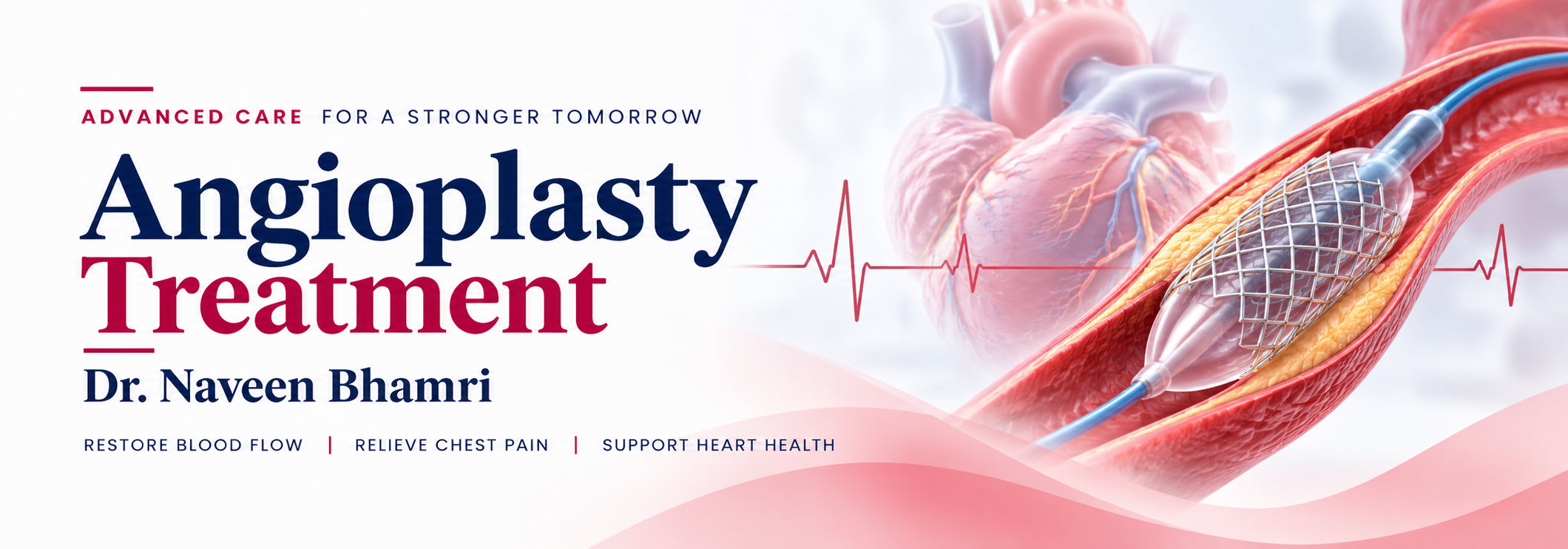
Angioplasty treatment in Delhi offers a way to clear a blocked heart artery without open-heart surgery, usually through a small puncture in the wrist or groin. When blood flow to the heart is reduced, timely treatment can relieve symptoms and protect the heart muscle. Most patients go home within a day or two and return to normal activities soon after. With over 27 years in cardiology, Dr. Naveen Bhamri is known for handling both routine and complex coronary cases. He carefully evaluates each patient to decide whether angioplasty is the right choice and which stent or technique will give the best long-term result, along with clear guidance on the angioplasty cost in Delhi.
What is Exactly Angioplasty?
Angioplasty is how a blocked heart artery is opened without cutting open the chest. Doctors also call it PCI. Before deciding on it, an experienced angioplasty specialist in Delhi will look at your ECG, echo and angiography reports to see exactly where the blockage is and how tight it is. If you’re considering angioplasty treatment in Delhi, here’s what the procedure usually involves:
Catheter Access: A thin tube goes in through the wrist or groin. You stay awake, and only that area is numbed.
Balloon Angioplasty: A tiny balloon is opened inside the narrowed artery to press the blockage back and let blood flow again.
Drug-Eluting Stent: A small mesh tube coated with medicine is left in place so the artery doesn’t narrow again.
Drug-Eluting Stent: A small mesh tube coated with medicine is left in place so the artery doesn’t narrow again.
Not every blockage needs a stent, and not every patient is suited for angioplasty. The right approach depends on the number of blocked arteries, their location, and your overall heart health.
Angioplasty at a Glance
Detail | What to Expect |
Procedure Time | 30 minutes to 2 hours |
Anaesthesia | Local anaesthesia; you stay awake |
Hospital Stay | Usually 1 to 2 days |
Return to Routine | Light activities within a week |
These timelines are general. Recovery can take longer after a heart attack, a complex blockage, or an emergency procedure. Your cardiologist will tell you what to expect in your case
When is Angioplasty Recommended?
Angioplasty isn’t decided on symptoms alone. Your cardiologist looks at your angiography findings, heart function and overall health before advising it. You may need angioplasty if you have:
- A heart attack that needs blood flow restored quickly
- Chest pain that returns despite medicines
- Breathlessness linked to a blocked artery
- A significant blockage on coronary angiography
- An abnormal stress test or TMT
- Unstable angina, with sudden chest pain
- Blockages in coronary arteries suitable for stenting
- Re-narrowing of a previously treated artery
- Symptoms that limit your daily activities
Symptoms or Signs You Should Not Ignore
A blocked heart artery often gives warning signs before a serious event. Some people dismiss them as gas, stress or tiredness. See a cardiologist if you notice:
- Chest pain or tightness
- Pain spreading to arm, jaw or back
- Breathlessness on mild effort
- Unusual tiredness while walking
- Sweating with chest discomfort
- Dizziness or fainting
Sudden, severe chest pain lasting more than a few minutes can be a heart attack. Don’t wait for it to settle; go to the nearest emergency right away.
How is Heart Blockage Diagnosed?
Angioplasty is advised only after tests confirm a blockage and show how much it affects blood flow to the heart. An experienced angioplasty specialist in Delhi chooses the tests based on your symptoms and health. Assessment may include:
- ECG
- Echocardiography (echo)
- TMT or stress test
- Stress echo, when needed
- Coronary angiography
- CT coronary angiography
- OCT or IVUS imaging, when indicated
- FFR to check blockage severity
- Cardiac enzymes such as troponin
- Lipid profile
- Blood glucose or HbA1c
- Kidney function tests
Angioplasty Management Options
Not every blockage needs a stent right away. A heart specialist recommends one or a combination of these options based on how severe the blockage is and how it affects your daily life.
Lifestyle and Medical Management
For mild or stable blockages, treatment often begins with medicines and lifestyle changes:
- Take blood thinners as prescribed.
- Use medicines to control chest pain.
- Keep LDL cholesterol at target.
- Control blood pressure and blood sugar.
- Quit smoking and tobacco completely.
- Follow a heart-healthy, low-fat diet.
- Stay active as your doctor advises.
- Attend regular follow-ups.
Medications
After angioplasty or any heart blockage treatment in Delhi, most patients are put on a combination of medicines adjusted to their individual condition. The most important are antiplatelet medicines, usually two blood thinners given together, which stop clots from forming inside the stent. Stopping them early, even for a few days, can lead to serious complications, so they should never be skipped without consulting your interventional cardiologist in Delhi. Statins are prescribed even when cholesterol is not very high, as they help stabilize plaque and slow the disease. Depending on the patient, medicines to control heart rate and blood pressure may also be added to reduce the heart’s workload and protect its function.
Risk Reduction After Angioplasty
For patients who have had angioplasty, the stent treats only the blocked segment, not the disease in the rest of the arteries. The risk of a future heart attack depends on how well cholesterol, blood pressure, diabetes and smoking are controlled after the procedure. Missing blood thinners in the first few months can also lead to a clot forming inside the stent. Good follow-up care also helps avoid repeat procedures, which keeps the overall heart blockage treatment cost in Delhi lower in the long run. Dr. Naveen Bhamri brings over 27 years of expertise in coronary interventions and long-term cardiac care, supporting a complete approach to protecting the heart after treatment. He creates personalised follow-up and risk-control plans based on each patient’s condition. Book your consultation with Dr. Naveen Bhamri, a trusted heart doctor in North Delhi, for an appropriate evaluation and long-term care plan.