
Lipid & Cholesterol Management
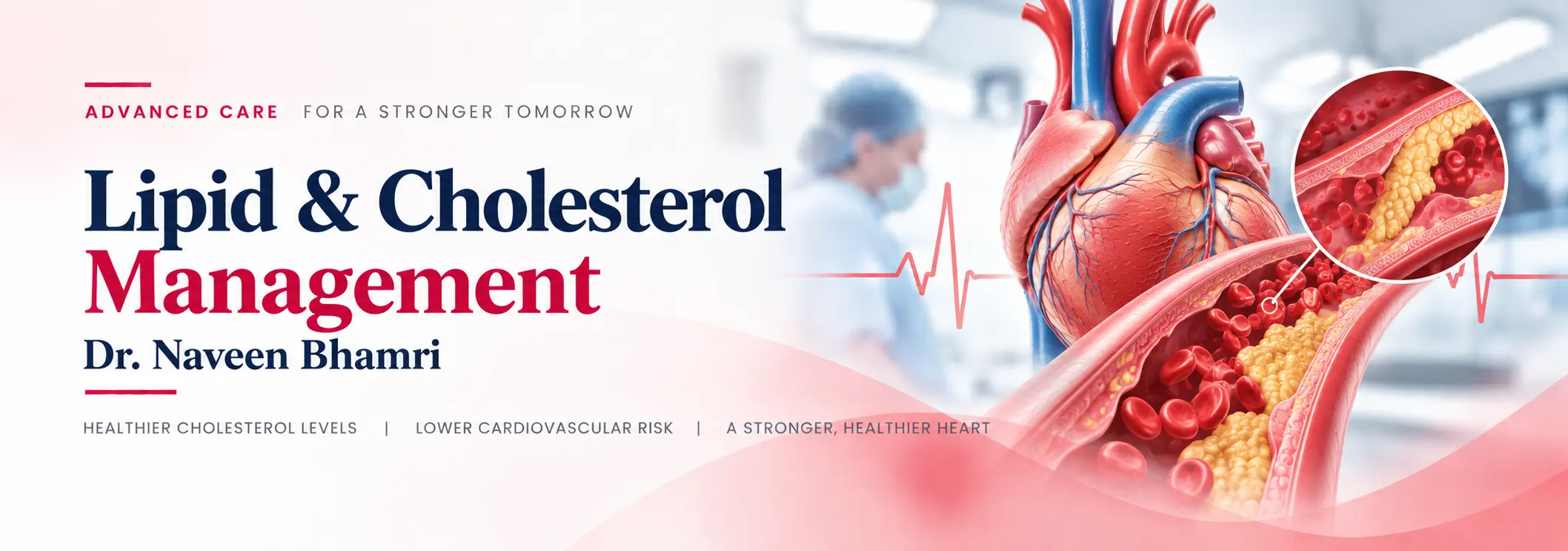
Lipid and cholesterol management helps reduce the long-term risk of plaque buildup, heart attack, and stroke. Lipid and cholesterol treatment in Delhi and High cholesterol treatment in Delhi is especially important for people with high LDL cholesterol, diabetes, high blood pressure, obesity, a family history of premature heart disease, or existing cardiovascular disease. Dr. Naveen Bhamri is the cardiologist specialist at Max-BLK Hospital in Shalimar Bagh and focuses on preventive cardiology and cardiovascular risk management. He helps patients understand their lipid profile, assess their overall cardiovascular risk, and choose appropriate lifestyle changes or medical treatment to support better heart health.
Take the next step towards better heart health: If you have high cholesterol or concerns about your cardiovascular risk, schedule a consultation with Dr. Naveen Bhamri to discuss your lipid profile and get a personalised treatment plan.
What is Exactly Lipid & Cholesterol Management?
Lipid management involves identifying abnormal levels of cholesterol or other blood fats and controlling them according to an individual’s cardiovascular risk. For patients seeking lipid and cholesterol treatment in Delhi or the lipid and cholesterol treatment doctor in Delhi, proper evaluation and personalised management can help reduce the risk of heart disease and related complications. The lipid profile commonly includes:
LDL Cholesterol: Often called “bad” cholesterol. It contributes to plaque formation in arteries.
HDL Cholesterol: Often called “good” cholesterol. It helps transport cholesterol back towards the liver.
Triglycerides: The most common type of fat in the blood. Persistently high levels can increase cardiovascular risk.
Total Cholesterol: Represents the overall cholesterol level and is interpreted alongside LDL, HDL, and other lipid measurements.
There is no single cholesterol target suitable for every patient. Current guidelines increasingly emphasize risk-based LDL-C goals, with lower targets for people at higher cardiovascular risk.
General Lipid Reference Levels
Lipid | General Reference |
LDL Cholesterol | Below 100 mg/dL |
HDL Cholesterol | Above 40 mg/dL in men; above 50 mg/dL in women |
Triglycerides | Below 150 mg/dL |
Total Cholesterol | Below 200 mg/dL |
These numbers are reference ranges, not personalised treatment targets. Your appropriate LDL-C goal may be considerably lower if you have established cardiovascular disease or other major risk factors. Let the cardiologist decide.
When is Lipid Management Recommended?
Treatment decisions should consider the whole cardiovascular risk profile, rather than cholesterol numbers alone. A detailed lipid assessment may be appropriate if you have:
- Persistently high cholesterol or triglycerides
- Diabetes or high blood pressure
- Obesity or metabolic risk factors
- A strong family history of premature heart disease
- Previous heart attack, stroke, or established artery disease
- Known coronary artery disease
- LDL cholesterol of 190 mg/dL or higher
- Suspected familial hypercholesterolemia
- Cholesterol levels that remain high despite lifestyle changes
Symptoms or Signs You Should Not Ignore
High cholesterol usually causes no symptoms. Many people discover it through a routine blood test. Seek medical evaluation if you develop:
- Chest pain or pressure
- Breathlessness
- Unusual fatigue during exertion
- Dizziness or fainting
- Sudden weakness or difficulty speaking
- Leg pain while walking that improves with rest
Note that these symptoms can indicate cardiovascular or vascular disease and should not be attributed to cholesterol alone.
How is Lipid Risk Diagnosed?
We recommend measuring Lp(a) at least once in adulthood, while ApoB can provide additional risk information in selected patients, particularly when triglycerides are elevated or residual cardiovascular risk needs further assessment. Assessment may include:
- Lipid profile
- LDL-C
- HDL-C
- Triglycerides
- Total cholesterol
- Non-HDL cholesterol
- Apolipoprotein B (ApoB), when indicated
- Lipoprotein(a) [Lp(a)]
- Blood glucose or HbA1c
- Blood pressure assessment
- Kidney and liver function tests
- Coronary artery calcium (CAC) assessment
Lipid & Cholesterol Management Options
A heart specialist suggests either or the combination of these treatment options depending on the condition of patients for better recovery and a healthy heart.
Lifestyle and Risk-Factor Management
Treatment commonly begins with sustainable lifestyle measures:
- Reduce saturated and trans fats.
- Increase fiber-rich foods, vegetables, and whole grains.
- Maintain a healthy weight.
- Exercise regularly.
- Avoid tobacco.
- Limit excess alcohol
- Control blood pressure and blood sugar.
- Maintain regular follow-up.
Medications
When lifestyle changes are insufficient or cardiovascular risk is high, lipid and cholesterol treatment in Delhi may include lipid-lowering medication under the expertise of the lipid and cholesterol doctor in Delhi. Statins remain a foundation of LDL-lowering treatment. Depending on the patient’s risk and response, treatment may also involve medicines such as ezetimibe, PCSK9 inhibitors, or other lipid-lowering therapies. The choice depends on LDL levels, cardiovascular history, treatment response, tolerance, and overall cardiovascular risk.
Risk Reduction in Individuals
For patients with established cardiovascular disease or multiple risk factors, the LDL-C goal may need to be substantially lower than the general reference value of 100 mg/dL. The 2026 ACC/AHA guideline recommends risk-based LDL-C goals, including <55 mg/dL for very-high-risk secondary prevention. Dr. Naveen Bhamri’s expertise in preventive cardiology and cardiovascular risk management supports a comprehensive approach to identifying lipid-related cardiovascular risk and planning appropriate long-term management as the lipid and cholesterol specialist in delhi. For individuals seeking lipid and cholesterol treatment in Delhi, Dr. Naveen Bhamri provides personalized lipid assessment and cholesterol-management strategies based on individual cardiovascular risk. Consult Dr. Naveen Bhamri for an appropriate evaluation and long-term management plan. Book your consultation now.