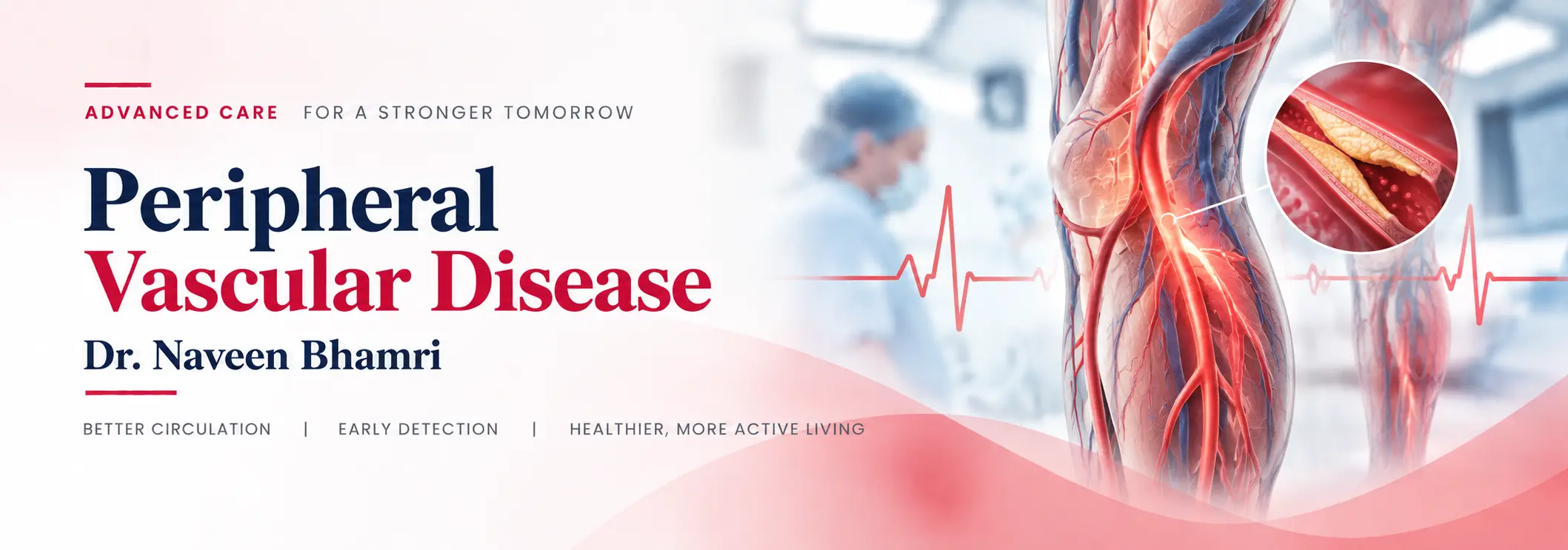
Peripheral Vascular Disease | Dr. Naveen Bhamri
Peripheral Artery Disease, Peripheral Angioplasty, Drug-Coated Balloon and Thrombolysis
Peripheral vascular disease (PVD), most often peripheral artery disease (PAD), occurs when plaque builds up and narrows the arteries supplying blood to the legs. Reduced blood flow can cause leg pain while walking, numbness, and slow-healing wounds. In severe cases, PAD can put the limb at risk. It also indicates a higher risk of heart attack and stroke, making early diagnosis and appropriate treatment important.
Dr. Naveen Bhamri is Chairman & HOD Cardiology at Max Hospital Shalimar Bagh and Chairman & Unit Head at BLK Max Hospital. With 27+ years of experience, 150+ peripheral angioplasties, and 500+ drug-coated balloon (DCB) procedures, he provides advanced catheter-based treatment for peripheral and carotid artery blockages. Patients looking for an experienced Peripheral vascular disease specialist in Delhi can consult Dr. Naveen Bhamri for evaluation and treatment.
Known as a trusted heart doctor in Delhi, Dr. Bhamri focuses on individualized treatment based on the location, severity, and nature of the arterial blockage. Treatment options may include peripheral angioplasty, drug-coated balloon therapy, and thrombolysis when clinically appropriate.
What is peripheral vascular disease?
Peripheral vascular disease is a group of conditions affecting blood vessels outside the heart and brain. If you are looking for a Peripheral vascular disease doctor in delhi, proper evaluation can help identify narrowed or blocked arteries early. In PAD, narrowed leg arteries cause claudication: pain, cramping or heaviness in the legs while walking, which eases with rest. Advanced disease can cause pain even at rest, skin changes, non-healing wounds and tissue damage. Some people may have no symptoms at all, making timely vascular assessment important.
Symptoms you should not ignore
- Leg pain, cramping or heaviness while walking that improves with rest
- A cold foot or leg, numbness or weakness
- Changes in skin colour or texture
- Weak or hard-to-feel pulses in the foot
- Slow-healing cuts or sores on the feet
- Persistent foot or leg pain, especially at rest
Sudden severe leg pain, coldness, numbness or weakness can mean a blood clot has blocked the artery (acute limb ischemia). This is an emergency. Get medical help immediately.
How is it diagnosed?
Evaluation may include:
- History and physical examination
- Ankle-Brachial Index (ABI), a simple non-invasive test, and Toe-Brachial Index (TBI)
- Doppler and arterial duplex ultrasound
- CT angiography or MR angiography
- Peripheral angiography, to locate and assess the blockage
Treatment options
Lifestyle and medicines. Stopping smoking, structured walking, healthy diet, and control of diabetes, blood pressure and cholesterol. Antiplatelet and cholesterol-lowering medicines are used as advised. Foot care is essential.
Peripheral angioplasty and stenting. A catheter and balloon open the narrowed artery, usually through a small puncture. A stent may be placed in selected cases to keep it open.
Drug coated balloon (DCB). A balloon coated with medicine opens the blockage and delivers the drug to the artery wall. It helps reduce re-narrowing, and in selected patients may avoid the need for a permanent stent.
Thrombolysis. When a sudden clot blocks a limb artery, clot-dissolving medicine can be delivered through a catheter directly to the clot. It is time-critical and used in carefully selected patients. Angioplasty may follow to treat the underlying narrowing.
Surgery. Bypass surgery or endarterectomy may be advised for extensive or complex disease that is unsuitable for catheter treatment.
Why patients choose Dr. Naveen Bhamri
- 27+ years of cardiology experience
- 150+ peripheral angioplasties and 500+ DCB procedures
- 50,000+ angiographies and 20,000+ angioplasties
- 3,00,000+ happy patients
- A plan matched to your blockage: medicines, balloon, DCB, stent or thrombolysis, only what you need
Frequently asked questions
Is PAD only a leg problem?
No. It reflects plaque buildup that can also affect the heart and brain arteries. A complete cardiac check-up is part of good PAD care.
Does every blockage need a procedure?
No. Many patients improve with medicines, exercise and risk-factor control. A procedure is advised only when needed.