
MCS (Mechanical Circulatory Support)
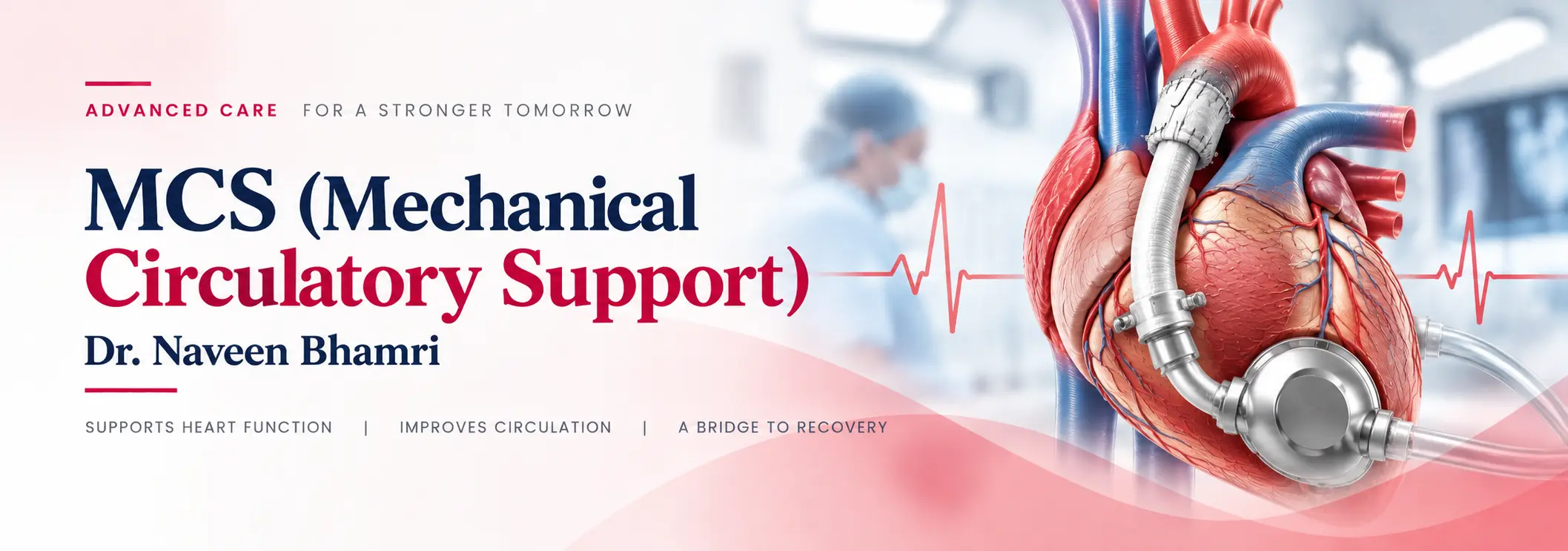
MCS can support the left ventricle, right ventricle, or both, depending on the patient’s individual needs. As an advanced cardiac intervention, it requires careful patient selection, continuous monitoring, and coordinated multidisciplinary care. Dr. Naveen Bhamri’s interventional cardiology practice focuses on the management of complex cardiovascular conditions, where advanced circulatory support may be considered as part of a comprehensive treatment strategy.
What is Mechanical Circulatory Support?
Mechanical Circulatory Support (MCS) refers to specialized devices that help maintain blood circulation when the heart is temporarily unable to pump enough blood to meet the body’s needs. Unlike a pacemaker, which regulates the heart’s electrical rhythm, MCS provides mechanical assistance to support blood circulation. Depending on the type of device used, it can help the heart pump blood forward or maintain circulation while the underlying cardiac condition is being treated.
For patients requiring advanced circulatory support, consulting an experienced Mechanical Circulatory Support specialist in Delhi can help determine the most appropriate treatment approach. The choice of MCS device depends on the underlying cause and severity of circulatory failure, the side of the heart affected, the expected duration of support, and the patient’s overall health and clinical condition.
Types of Mechanical Circulatory Support Devices
Mechanical circulatory support devices differ in how they assist the heart and how long they are typically used. Common devices include:
1. Intra-Aortic Balloon Pump (IABP)
IABP is a temporary / short-term support. It uses counterpulsation, inflating during diastole and deflating during systole. This can reduce cardiac workload and improve coronary blood flow. It may be used in selected cases of cardiogenic shock or high-risk cardiac procedures.
2. Impella Series
The Impella Series MCS is temporary / short-term support. These catheter-mounted microaxial flow pumps draw blood from the left ventricle and deliver it into the aorta, providing mechanical unloading and circulatory support. Different models provide different levels of support, including left- and right-sided ventricular support.
3. Veno-Arterial ECMO (VA-ECMO)
VA-ECMO is a temporary / short-term support for the heart. VA-ECMO drains venous blood, adds oxygen, and removes carbon dioxide through an external membrane, then returns the blood to the arterial circulation. It can provide powerful cardiac and respiratory support in selected patients with severe cardiopulmonary failure or cardiac arrest.
4. TandemHeart
TandemHeart uses an extracorporeal centrifugal pump to draw oxygenated blood from the left atrium through a transseptal cannula and return it to the arterial circulation. It is temporary / short-term support. It can provide substantial left-sided circulatory support in selected patients with severe cardiac failure.
5. Left Ventricular Assist Device (LVAD)
LVAD is a durable / long-term support for the heart. An LVAD is an implantable mechanical pump that assists the left ventricle in pumping blood to the body. It may provide support for months or years in selected patients with advanced or end-stage heart failure, including as a bridge to transplantation or as long-term therapy.
6. Total Artificial Heart (TAH)
A Total Artificial Heart replaces the failing ventricles and native heart valves with an artificial pumping system. TAH is a durable / long-term support for the heart. It is reserved for selected patients with severe biventricular failure and may be used as a bridge while awaiting heart transplantation.
When is MCS Recommended?
MCS is not routinely required for heart failure. It is considered in selected patients when the heart cannot maintain adequate circulation despite appropriate medical treatment. It may be considered in situations such as:
- Cardiogenic shock with inadequate organ perfusion
- Severe heart failure with dangerously low cardiac output
- Selected cases of acute myocardial infarction complicated by cardiogenic shock
- Severe ventricular failure requiring temporary circulatory support
- Patients requiring a bridge to recovery, further treatment, or advanced heart-failure therapy
Top heart surgeons always emphasize careful selection, hemodynamic assessment, and multidisciplinary decision-making before initiating temporary MCS.
Symptoms or Signs You Should Not Ignore
These symptoms require urgent medical evaluation rather than routine outpatient treatment. Cardiogenic shock is a medical emergency. Warning signs can include:
- Severe or rapidly worsening breathlessness
- Very low blood pressure
- Cold or clammy skin
- Confusion or reduced alertness
- Very little urine output
- Rapid heartbeat
- Severe weakness or exhaustion
- Chest pain, particularly with symptoms of a heart attack
How is Cardiogenic Shock Diagnosed?
Depending on the clinical situation, evaluation may include:
- Clinical examination and medical history
- ECG
- Echocardiography
- Blood pressure and oxygen monitoring
- Blood tests, including lactate
- Cardiac biomarkers
- Chest imaging
- Coronary angiography
- Invasive hemodynamic monitoring
Mechanical Circulatory Support (MCS)
MCS can function as a bridge to recovery, a bridge to treatment decisions, or a bridge to advanced therapies, depending on the individual clinical situation. Because these devices are used in critically ill patients, they require close monitoring for potential complications, including bleeding, vascular complications, limb ischemia, stroke, infection, and other device-related problems.
Patients requiring advanced circulatory support may benefit from evaluation by an experienced mechanical circulatory support doctor in Delhi. Dr. Naveen Bhamri is the cardiologist specialist at Max-BLK Hospital in Shalimar Bagh, with expertise in interventional cardiology, complex coronary interventions, and advanced cardiovascular care. His approach supports comprehensive assessment and individualized treatment planning for critically ill cardiac patients who may require specialized intervention.
For severe heart failure, cardiogenic shock, or critically low cardiac output, consult Dr. Naveen Bhamri for timely assessment and an appropriate advanced cardiac treatment strategy. Book a consultation today.