drnaveenbhamri.com

Balloon Dilatation of Stenotic


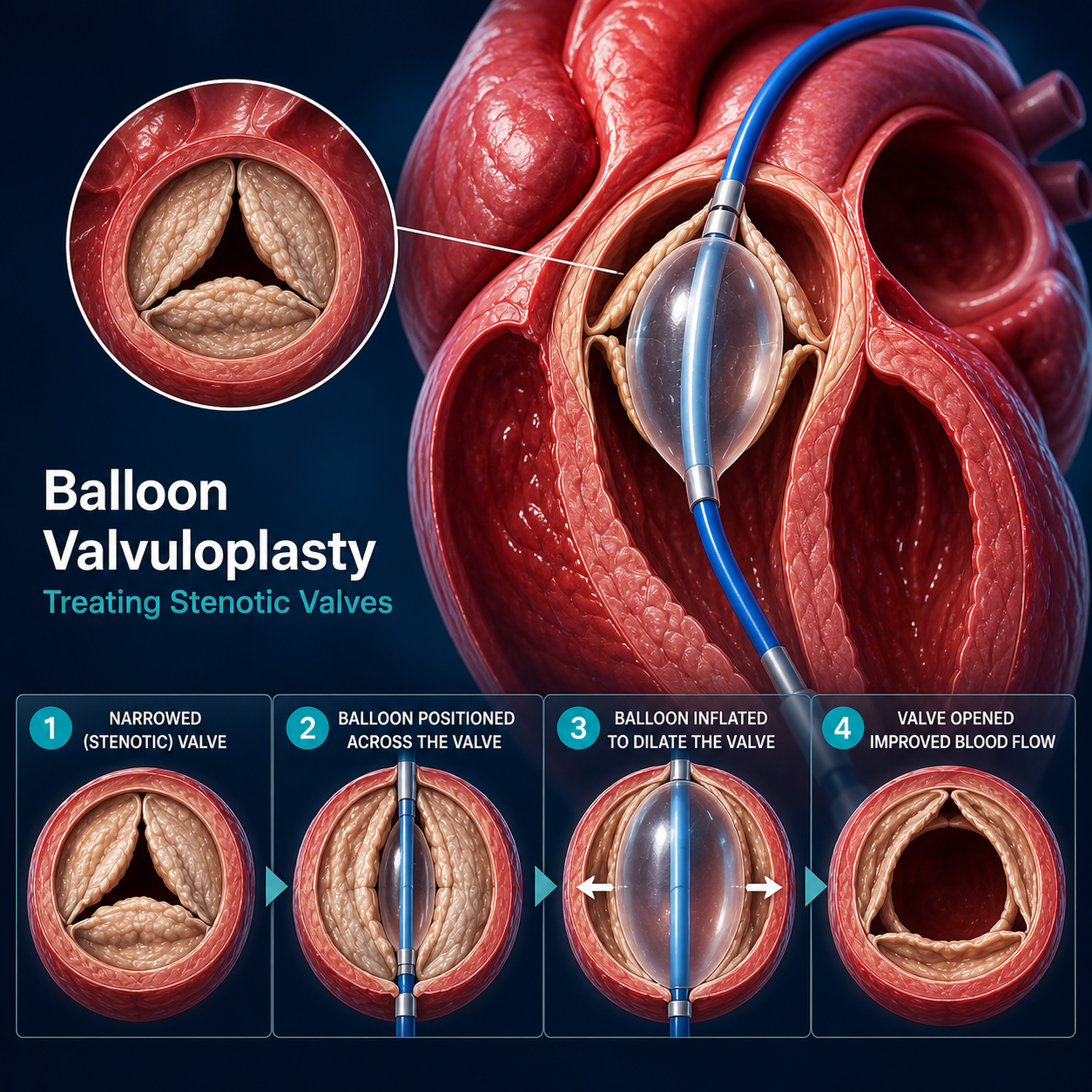
Balloon Valvuloplasty (also called balloon dilation) is a specialized procedure used to treat a stenotic valve—a condition where a heart valve becomes stiff, scarred, or fused, preventing it from opening fully. When a valve is narrowed (stenosed), the heart must work significantly harder to pump blood through the smaller opening.

Balloon Dilatation of Stenotic​

What is a Stenotic Valve?

In a healthy heart, valves act as one-way gates that open wide to let blood flow through. In stenosis:

  • The valve leaflets (flaps) become thick or calcified.

  • The opening narrows, restricting blood flow.

  • This can lead to fatigue, shortness of breath, chest pain, and eventually heart failure.

How Balloon Dilation Works

Balloon valvuloplasty is a percutaneous (through the skin) procedure, meaning it does not require opening the chest. It is often used for the mitral, aortic, or pulmonary valves.


1. Access and Navigation

A thin, flexible tube (catheter) is inserted through a blood vessel, usually in the groin. Using real-time X-ray imaging (fluoroscopy), the cardiologist guides the catheter up into the heart and positions it precisely within the narrowed valve.


2. The Dilation Process

  • Placement: A specialized deflated balloon at the tip of the catheter is placed across the stiff valve leaflets.

  • Inflation: The doctor quickly inflates the balloon. The force of the inflation stretches the valve opening and separates the leaflets that have become fused or stuck together.

  • Verification: The balloon is deflated and inflated several times to ensure the opening is sufficiently widened.

3. Completion

Once the valve is sufficiently opened, the balloon is deflated and removed along with the catheter. The valve can now open more freely, restoring better blood flow and reducing the workload on the heart muscle.

Why Choose Dilation Over Surgery?

While some cases eventually require a full valve replacement, balloon dilation offers several advantages:

  • Minimally Invasive: No large incisions or use of a heart-lung machine.

  • Shorter Recovery: Most patients stay in the hospital for only one night and return to normal activities within days.

  • Effective Bridge: It is an excellent option for children with congenital stenosis or for elderly patients who may be too frail for open-heart surgery.

Post-Procedure Expectations

Following the dilation, patients typically experience immediate improvement in symptoms. Long-term care involves:

  • Follow-up Echo: An echocardiogram (ultrasound) is usually performed to measure the new valve area and ensure blood is flowing correctly.

  • Monitoring: While highly effective, some valves may narrow again over time (restenosis), requiring further monitoring or future intervention.

Make Appointment


Scroll to Top